

In modern manufacturing and engineering, space constraints often demand components that deliver high performance without sacrificing compactness. This is where thin section bearings shine. Designed with a slim cross-section—where the bearing’s outer diameter (OD) minus inner diameter (ID) is minimized—these bearings are revolutionizing industries that prioritize weight reduction, precision, and space efficiency.
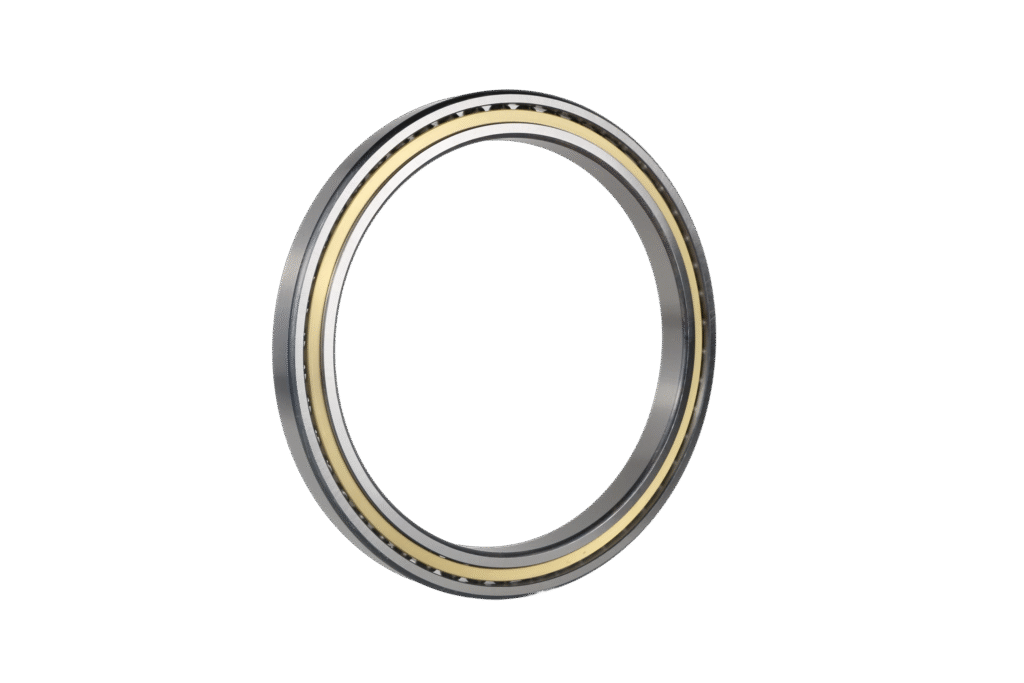
Key Benefits of Thin Section Bearings
Unlike traditional bearings, thin section bearings offer three game-changing advantages. First, their compact design slashes installation space by up to 40%, making them ideal for devices where every millimeter counts, such as robotic arms or medical imaging equipment. Second, their lightweight construction reduces overall system weight, a critical factor in aerospace applications (e.g., satellite components) and electric vehicles, where weight directly impacts energy efficiency. Third, they maintain exceptional precision: most thin section bearings meet ABEC-1 to ABEC-7 accuracy standards, ensuring smooth rotation even in high-speed operations like CNC machine spindles.
Top Applications of Thin Section Bearings
The versatility of thin section bearings makes them indispensable across sectors. In robotics, they power articulated joints, enabling precise, repeatable movements without adding bulk. Medical equipment, such as MRI machines and surgical robots, relies on their non-magnetic variants (often made from stainless steel) to avoid interfering with sensitive imaging tools. The aerospace industry uses thin section bearings in aircraft landing gear and avionics, where their high load capacity (up to 5,000 lbs for some models) and resistance to extreme temperatures (-50°C to 200°C) ensure reliability. Even industrial automation—from conveyor systems to packaging machinery—benefits from their ability to fit into tight conveyor frames while supporting continuous operation.

How to Select the Right Thin Section Bearings
Choosing the correct thin section bearing starts with three key considerations. First, material: Chrome steel (AISI 52100) works for general industrial use, while stainless steel (AISI 440C) is better for corrosive environments (e.g., food processing). Second, sealing type: Open bearings suit clean, low-debris areas, while shielded or sealed bearings (with rubber or metal seals) protect against dust and moisture in harsh settings. Third, load capacity: Calculate radial and axial loads—thin section bearings excel at radial loads but may need supplementary support for heavy axial loads. Always verify the bearing’s speed rating (usually listed in rpm) to match your application’s operational needs.
In short, thin section bearings are more than just space-saving components—they are enablers of innovation. By understanding their benefits, applications, and selection criteria, engineers and buyers can unlock efficiency and precision in even the most space-constrained systems. For tailored solutions, partner with a supplier that offers custom thin section bearings aligned with your industry’s unique demands.