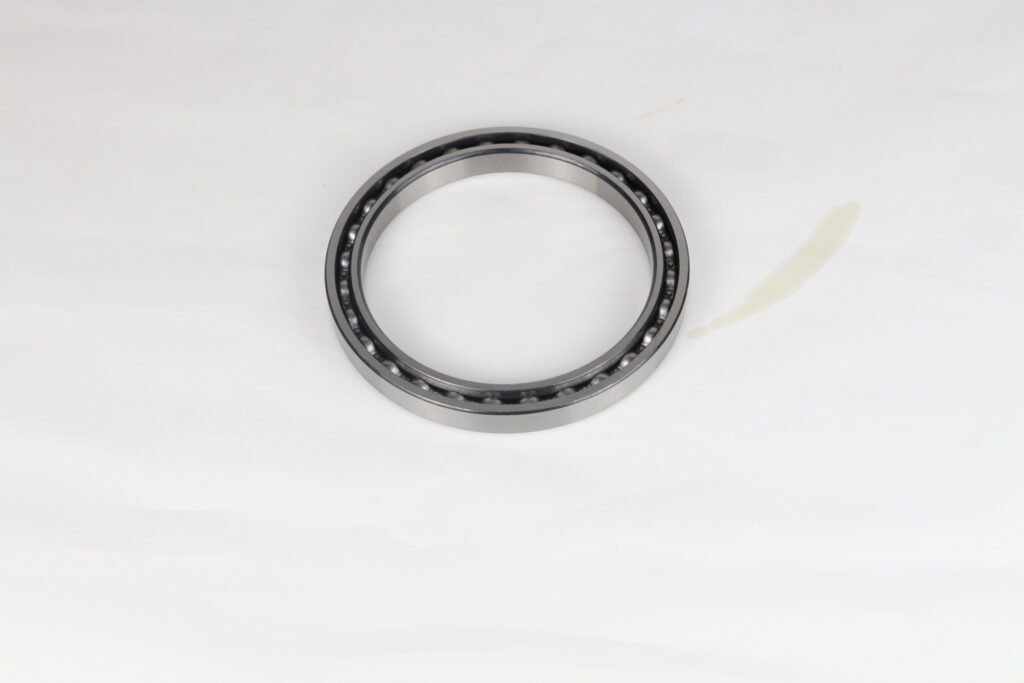

Thin section ball bearings stand out as a specialized variant of thin section bearings, leveraging spherical rolling elements to deliver low friction, high rotational precision, and space-saving design. Unlike other thin section bearing types, their ball-based structure makes them ideal for applications requiring smooth, quiet operation and moderate load capacities—addressing critical needs across high-tech and industrial sectors. Below are their most impactful real-world applications.
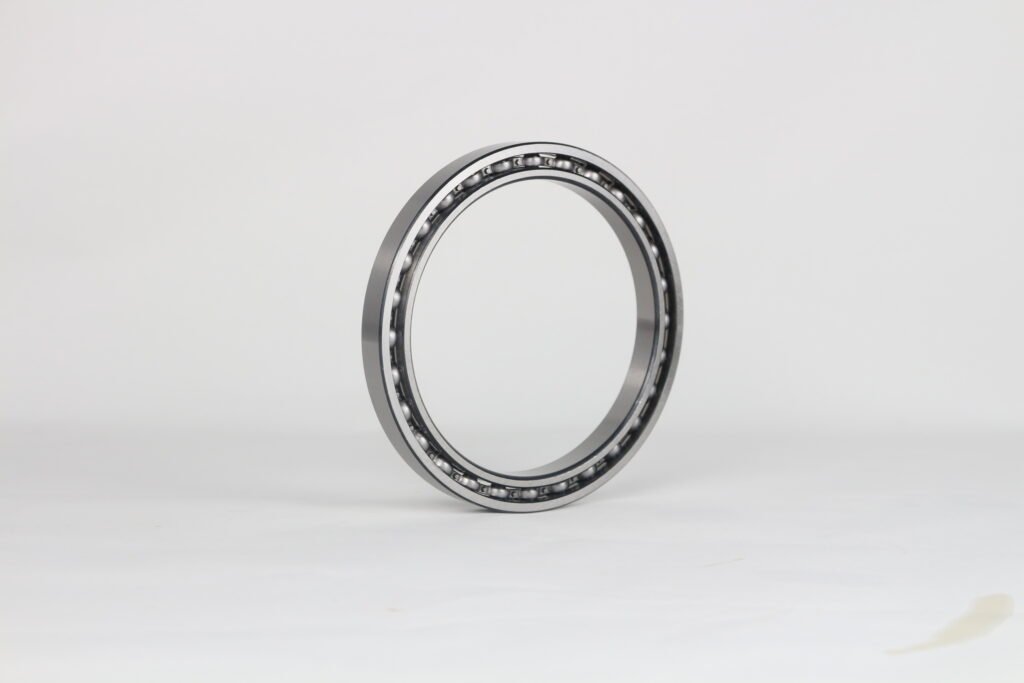
- Aerospace & Defense: Lightweight Reliability for Extreme Environments
In aerospace, every gram and millimeter matters—and thin section ball bearings excel here. They are widely used in satellite antenna joints, where their compact cross-section (often as thin as 3mm) fits within tight spacecraft frames, while their low friction ensures precise antenna positioning for communication. Additionally, aircraft cockpit control systems (e.g., steering columns and instrument panels) rely on these bearings to enable smooth, responsive movements without adding bulk. Many models are engineered to withstand extreme temperatures (-60°C to 220°C) and vibration, meeting aerospace industry standards like AS9100. - Medical Equipment: Precision for Life-Saving Tools
Medical devices demand sterility, non-magnetic properties, and ultra-high precision—all strengths of thin section ball bearings. Surgical robots (e.g., laparoscopic systems) use stainless steel (AISI 440C) variants to power tiny, articulated arms, allowing surgeons to perform minimally invasive procedures with sub-millimeter accuracy. They also feature in MRI machines: non-magnetic thin section ball bearings prevent interference with magnetic imaging, ensuring clear scans while enabling smooth movement of the machine’s rotating components. - Robotics & Automation: Compact Power for Agile Movement
Industrial and collaborative robots depend on thin section ball bearings for their flexibility. In collaborative robots (cobots), these bearings are integrated into joint modules, where their lightweight design reduces robot arm inertia—letting cobots work safely alongside humans with fast, precise movements. For automated guided vehicles (AGVs) used in warehouses, they fit into small wheel hubs, delivering low-friction rotation that extends battery life and supports 24/7 operation. - Industrial Machinery: Efficiency for Tight Spaces
In industrial settings, thin section ball bearings solve space constraints in key equipment. CNC machine tool spindles use them to maintain high rotational speeds (up to 10,000 rpm) with minimal runout, ensuring precise cutting of metal parts. They also enhance packaging machinery: in vertical form-fill-seal machines, their compact size fits into narrow conveyor frames, while smooth operation prevents jams during high-speed packaging of food or pharmaceuticals.
Why Choose Thin Section Ball Bearings?
Beyond their space-saving design, these bearings offer easy installation (many are available in split designs) and compatibility with standard mounting configurations. Their ball-based structure also requires less lubrication than roller bearings, reducing maintenance costs.
For businesses seeking to optimize equipment performance in tight spaces, thin section ball bearings are a proven solution. By aligning the bearing’s material (chrome steel for general use, stainless steel for corrosion resistance) and precision grade (ABEC-3 to ABEC-7) with application needs, engineers can unlock maximum efficiency.