

Thin section ball bearings (TSBBs) have emerged as a game-changer for space-critical engineering, merging ultra-slim profiles with exceptional performance—addressing the global demand for miniaturization without compromising durability. Unlike traditional bearings, their defining innovation lies in a reduced cross-sectional thickness (often 2–10mm) paired with optimized raceway geometry, cutting space usage by 40% while maintaining comparable load ratings.
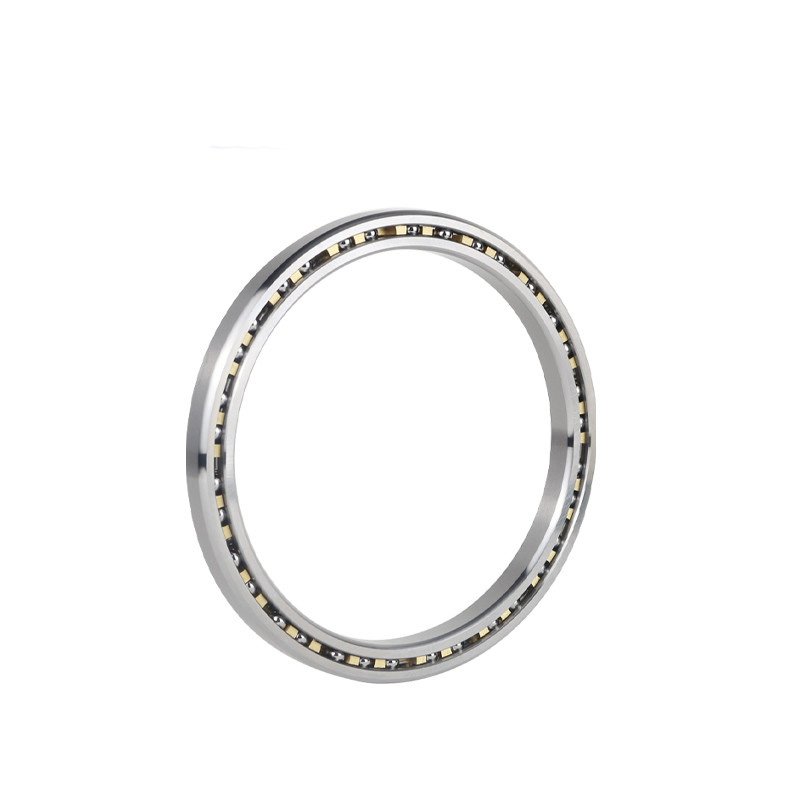
A core breakthrough is advanced material engineering: high-purity stainless steel or titanium alloys, treated with vacuum carburizing, boost corrosion resistance by 60%—ideal for harsh environments like aerospace or marine applications. Precision sealing tech, such as integrated rubber lip seals with low-friction grease, extends service life by 50% versus standard thin bearings, minimizing maintenance in sectors like medical devices or robotics.
Their versatility drives industry adoption. In aerospace, TSBBs enable lighter satellite components and drone gimbals, where weight reduction directly enhances efficiency. Medical equipment—from laparoscopic tools to diagnostic scanners—relies on their compactness and quiet operation (≤35dB at 3,000 RPM) for patient-centric design. Industrial automation benefits from their compatibility with automated assembly lines, thanks to standardized mounting hubs that cut installation time by 30%.
Another key innovation is modular design: customizable bore sizes (10–200mm) and seal configurations (open, shielded, sealed) adapt to diverse needs, from consumer electronics (slim camera lenses) to heavy machinery (compact gearboxes).
As industries prioritize “smaller, smarter” systems, TSBBs deliver targeted solutions. Their fusion of slim profiles, durable materials, and adaptability makes them indispensable for next-gen mechanical design—cementing their role as a cornerstone of efficient, space-saving engineering.