

Thin section bearings, also known as slim bearings, are specialized rolling bearings designed with a narrow cross-section—an innovative feature that sets them apart from standard bearings. Their unique design delivers exceptional space-saving benefits while maintaining reliable load-bearing performance, making them indispensable in industries where compactness and precision are non-negotiable. In this guide, we’ll explore their core advantages, top applications, and critical selection tips to help you choose the right thin section bearings for your project.
Core Advantages of Thin Section Bearings
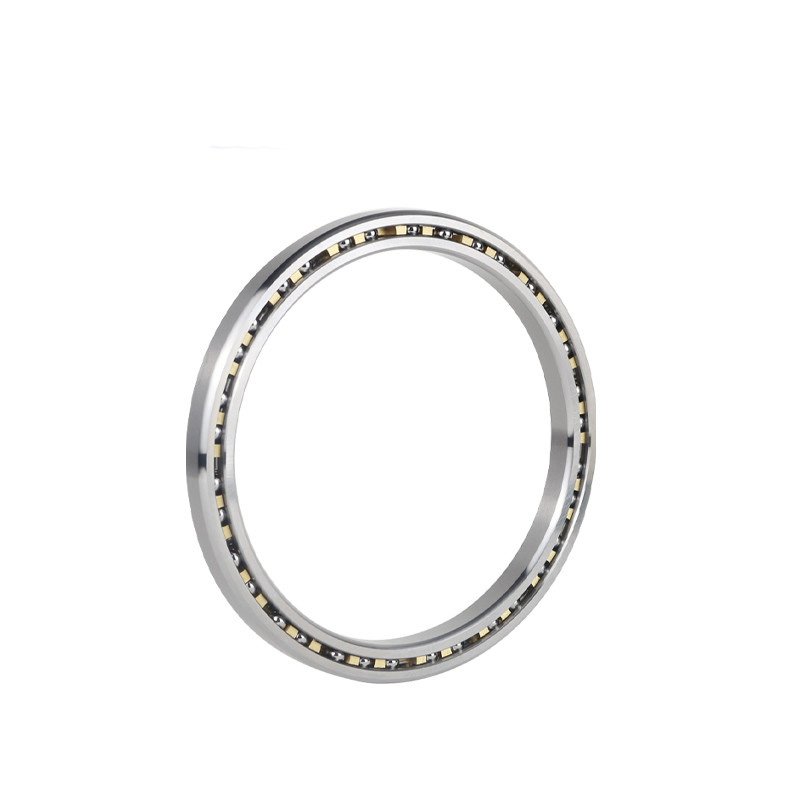
The primary appeal of thin section bearings lies in their space-efficient design. With an outer diameter (OD) to inner diameter (ID) ratio optimized for slimness, they fit seamlessly into tight assemblies where standard bearings would be too bulky. This compactness also translates to reduced weight, a key benefit for weight-sensitive applications like aerospace and robotics, where every gram impacts performance.
Despite their slim profile, high-quality thin section bearings offer impressive load capacity and rotational precision. Manufactured with premium materials such as high-carbon chromium steel or stainless steel, and finished with precision grinding, they minimize friction and ensure smooth operation even at high speeds. Many models also support corrosion resistance treatments, extending service life in harsh environments like marine or food processing.
Top Applications of Thin Section Bearings
Thin section bearings are versatile across multiple industries, thanks to their balance of compactness and performance. Here are their most common uses:
- Aerospace & Defense: Used in aircraft landing gear components, satellite antennas, and missile guidance systems, where space and weight constraints are critical.
- Robotics & Automation: Integrated into robotic arms and automated assembly lines, providing precise rotation without sacrificing maneuverability.
- Medical Equipment: Found in MRI machines, surgical robots, and diagnostic tools, where sterility, precision, and compact design are essential.
- Industrial Machinery: Applied in CNC machine spindles, packaging equipment, and textile machines, optimizing space in complex assemblies.
How to Select the Right Thin Section Bearings
To maximize performance, consider these key factors when selecting thin section bearings:load type (radial, axial, or combined), operating speed, environmental conditions (temperature, moisture, debris), and mounting requirements. For corrosive environments, choose stainless steel bearings with sealed designs. For high-speed applications, prioritize bearings with low-friction cages made of polymer or brass.
Investing in premium thin section bearings ensures long-term reliability and efficiency, especially in critical applications. Always partner with trusted suppliers to guarantee material quality and manufacturing precision.