

Meta Description: Learn how to select and install thin wall bearings for space-constrained, high-precision applications. Avoid common mistakes and find the perfect fit for robotics, aerospace, and medical devices.
Introduction
When every millimeter and gram matters for your design, standard bearings often fall short. Thin wall bearings solve this pain point—they’re compact, lightweight, and durable, but only if you match them to your specific needs. This guide breaks down practical, field-tested advice to help you pick and use thin wall bearings like a pro.
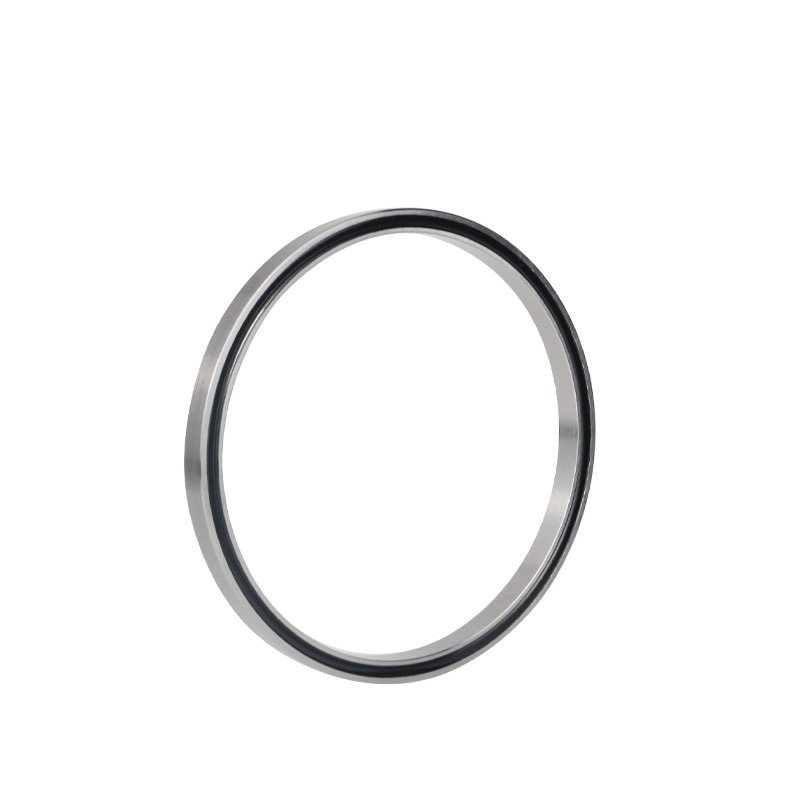
What Makes Thin Wall Bearings Unique?
Slim Profile Design: Defined by the ratio of inner diameter to cross-section, thin wall bearings use less material than standard alternatives without sacrificing core performance.
Space-Saving Advantage: Ideal for tight enclosures in robotics arms, medical imaging tools, and aerospace components where bulky parts won’t fit.
Weight Reduction: Critical for drones, satellites, and portable industrial tools—cuts unnecessary mass while maintaining load capacity.
High Precision: Minimized friction and runout make these bearings perfect for optical equipment and semiconductor manufacturing gear.
4 Critical Mistakes to Avoid When Selecting Thin Wall Bearings
- Misjudging Load Direction
Thin wall bearings come in two core types: deep groove (radial loads only) and angular contact (combined radial + axial loads).
Example: A robotic joint that tilts needs angular contact bearings—deep groove options will wear out prematurely.
Fix: Map your project’s load vectors before ordering to match the right bearing type. - Neglecting Environmental Conditions
Standard 52100 chrome steel bearings rust quickly in washdown environments (food processing) or coastal areas.
Solutions: Opt for 440C stainless steel bearings for corrosion resistance, or PTFE-caged bearings for chemical compatibility. - Skimping on Lubrication
Thin wall bearings have limited internal space for grease, so lubrication quality is make-or-break.
Recommendations: Use high-temperature, low-viscosity grease for high-speed applications; re-lubricate at 50% the interval of standard bearings. For cleanrooms, choose dry lubricants like molybdenum disulfide. - Ignoring Mounting Tolerances
Thin races deform easily if housing/shaft specs are off.
Ideal Fit: Stick to H7/p6 for inner rings and H7/h6 for outer rings—balances holding power and accommodates thermal expansion.
Real-World Applications of Thin Wall Bearings
Medical Devices
MRI gradient coil assemblies use non-magnetic stainless steel thin wall bearings to avoid imaging interference. Compact design lets coils sit closer to patients for higher-resolution scans.
Aerospace
Satellite antenna deployers rely on these bearings to handle launch shocks and repeated movement. Lightweight design cuts satellite mass, lowering launch costs.
Robotics
Collaborative robots (cobots) use thin wall bearings in joints for smooth, precise movement. Slim profile keeps robot arms compact, enabling safe human-machine collaboration in factories.
Final Buying & Usage Tips
Partner with suppliers who engineer bearings (not just resell)—they can calculate dynamic load ratings and life expectancy for your exact application.
Always test samples in real operating conditions before bulk orders.
Don’t overspec: Skip stainless steel or PTFE cages if your project doesn’t need corrosion/chemical resistance to save costs.
CTA
Need help picking the right thin wall bearing for your project? Drop a comment below with your application details, or contact our team to get a customized recommendation. For more bearing selection guides, subscribe to our blog and never miss a practical tip.