

In the world of precision engineering and industrial automation, the performance of mechanical equipment hinges on every small component. Among these critical parts, the rotary cross roller bearing stands out as a core element that underpins high-precision, heavy-load rotational motion. For manufacturers and engineers working with machine tools, industrial robots, or precision measuring devices, choosing the right rotary cross roller bearing is not just about ensuring equipment operation—it’s about unlocking higher efficiency, stability, and longevity for your entire production line. This guide breaks down everything you need to know about rotary cross roller bearings, from their core design and key benefits to practical selection and application tips, helping you make the most informed decision for your specific industrial needs.
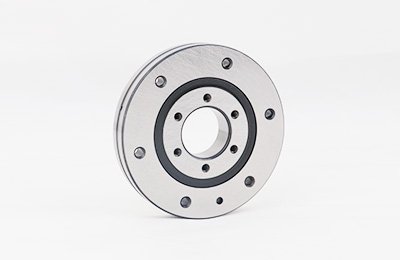
What Is a Rotary Cross Roller Bearing?
At its core, a rotary cross roller bearing is a specialized precision bearing engineered for rotational motion in applications that demand both compact design and superior load capacity. Its defining feature lies in the unique arrangement of cylindrical rollers between the inner and outer rings: these rollers are positioned at a 90-degree cross angle to one another, with each roller alternating direction to create a dense, interlocking pattern.
Unlike traditional bearing designs that rely on steel balls for load distribution, the cylindrical rollers of a rotary cross roller bearing create line contact with the raceways of the inner and outer rings, rather than point contact. This structural choice is the foundation of the bearing’s exceptional performance, allowing it to handle complex load combinations that would challenge other bearing types. Additionally, most rotary cross roller bearings feature a precision-machined cage or separator that holds the rollers in place, minimizing friction and ensuring smooth, consistent rotation even at high speeds.
Sealed and open design options are also available for rotary cross roller bearings. Sealed variants use high-quality synthetic rubber seals to block dust, dirt, and other contaminants from entering the bearing interior, protecting the grease and rolling elements and reducing maintenance needs—an essential feature for harsh industrial environments.
Key Benefits of Rotary Cross Roller Bearings
The cross roller design of these rotary bearings delivers a suite of advantages that make them the top choice for precision and heavy-load industrial applications. These benefits directly address the most common pain points engineers face, from limited installation space to inconsistent performance under complex loads:
- Unmatched Load Capacity for Complex Forces
Rotary cross roller bearings excel at handling radial loads, axial loads, and moment loads simultaneously—a capability that few other standard bearings can match. The 90-degree crossed roller arrangement distributes all types of forces evenly across the raceways, meaning a single rotary cross roller bearing can replace the need for two separate bearings in many applications. This not only simplifies equipment design but also eliminates the performance gaps that can occur with dual-bearing setups. - Exceptional Rigidity and Minimal Deflection
Thanks to the line contact between rollers and raceways, these bearings offer far higher rigidity than ball bearings of the same size. Under heavy loads or high-speed rotation, they exhibit minimal deflection and vibration, ensuring precise positioning and stable operation. This rigidity is critical for precision equipment like CNC machine tool spindles and industrial robot joints, where even tiny deviations can compromise product quality or equipment safety. - Space-Saving Compact Design
Industrial equipment design is often constrained by space, and rotary cross roller bearings solve this problem with their ultra-compact structure. By combining the load-handling capabilities of multiple bearings into a single unit, they reduce the required installation height and overall footprint of mechanical assemblies. This compactness supports the trend of downsizing and lightweighting in modern industrial machinery, without sacrificing performance or load capacity. - High Rotational Precision
Manufactured to strict precision grades (including P2, P4, P5, and P6), rotary cross roller bearings deliver outstanding rotational accuracy. The precision-ground raceways and evenly spaced rollers ensure low runout and smooth rotation, making them ideal for applications that demand exact positioning, such as precision measuring devices, semiconductor manufacturing equipment, and robotic arms. - Low Friction and Long Service Life
The precision cage design minimizes contact between rollers, reducing friction and heat generation during operation. When paired with high-quality lubricants and sealed protection, rotary cross roller bearings experience less wear and tear, leading to a longer service life and lower total cost of ownership for industrial equipment.
How Rotary Cross Roller Bearings Compare to Traditional Ball Bearings
To fully understand the value of rotary cross roller bearings, it’s important to compare them to the more common ball bearings—another staple in industrial motion systems. The table below highlights the key differences between the two, focusing on the factors that matter most for industrial applications:
Feature Rotary Cross Roller Bearing Traditional Ball Bearing
Load Handling Handles radial, axial, and moment loads simultaneously Limited to basic radial and axial loads; poor for moment loads
Contact Type Line contact (even force distribution) Point contact (concentrated force)
Rigidity Very high; minimal deflection under load Low; noticeable deflection with heavy loads
Space Efficiency Compact; single bearing replaces dual setups Less efficient; requires more space for equivalent load capacity
Rotational Precision High (precision grade options available) Adequate for general use; not ideal for high-precision applications
Friction Low (precision cage design) Medium; higher vibration at high speeds
In short, ball bearings work well for general, low-to-medium load applications where precision and rigidity are not top priorities. Rotary cross roller bearings, by contrast, are the superior choice for high-precision, heavy-load, and space-constrained applications—where performance and reliability directly impact operational efficiency.
Common Industrial Applications of Rotary Cross Roller Bearings
The unique combination of load capacity, rigidity, precision, and compactness makes rotary cross roller bearings indispensable across a wide range of industrial sectors. Their ability to perform in harsh and demanding environments has made them a core component in some of the most advanced mechanical equipment today: - Industrial Robotics and Automation
Robot joints, robotic arms, and rotary actuators all rely on rotary cross roller bearings for smooth, precise movement and heavy-load support. The bearings’ compact design and high rigidity allow robots to perform complex tasks with exact positioning, while their ability to handle moment loads ensures stability during lifting and manipulation operations. - Machine Tools and CNC Equipment
CNC machine tool spindles, rotary tables, and milling machines demand the highest levels of precision and rigidity. Rotary cross roller bearings deliver the stable rotation and minimal deflection needed for high-accuracy machining, ensuring consistent product quality and reducing tool wear. - Precision Measuring and Testing Equipment
Coordinate measuring machines (CMMs), optical measuring devices, and industrial testing equipment require ultra-precise rotational motion. The high precision grades of rotary cross roller bearings eliminate runout and vibration, ensuring accurate measurements and reliable test results. - Heavy-Duty Industrial Machinery
In construction, metallurgy, and port equipment—such as small cranes, rotary conveyors, and metal processing machines—rotary cross roller bearings handle heavy complex loads in limited space. Their sealed designs also make them suitable for dusty, dirty industrial environments, reducing maintenance frequency. - Medical and Semiconductor Equipment
The medical and semiconductor industries demand sterile, high-precision equipment with compact designs. Rotary cross roller bearings are used in medical imaging devices, semiconductor wafer processing equipment, and laboratory automation systems, where their precision and reliability are critical for safe and efficient operation.
How to Select the Right Rotary Cross Roller Bearing
Choosing the perfect rotary cross roller bearing for your application is not a one-size-fits-all process. The right selection depends on your specific operational requirements, and making the wrong choice can lead to poor equipment performance, premature wear, and increased downtime. Follow these practical steps to select a bearing that aligns with your needs: - Assess Your Load Requirements
First, identify the type and magnitude of all loads the bearing will encounter: radial (perpendicular to the axis), axial (along the axis), and moment (tilting/rotational) loads. Rotary cross roller bearings are rated for specific load capacities, so ensure the bearing you choose can handle the maximum loads your equipment will generate—with a small safety margin for unexpected peak forces. - Consider Space and Installation Constraints
Measure the available installation space for the bearing, including inner diameter, outer diameter, and width. Rotary cross roller bearings come in a range of sizes (with shaft diameters from 10mm up to 800mm and more) and profiles, including slim and super slim variants for ultra-space-constrained applications. Choose a bearing that fits your space without compromising load capacity or rigidity. - Match Precision Grade to Your Application
Precision grades directly impact the bearing’s rotational accuracy and runout. For general industrial applications, P5 or P6 grade bearings are sufficient. For high-precision equipment like CNC machines and measuring devices, opt for higher grades such as P4 or P2 to ensure the exact positioning you need. - Choose the Right Design (Sealed/Open, Cage Type)
Sealed vs. Open: Select sealed bearings for harsh, dusty, or dirty environments to reduce maintenance and protect internal components. Open bearings are suitable for clean, lubricated environments where easy maintenance is a priority.
Cage Type: Caged or separator-style bearings offer low friction and high-speed rotation, while full-complement designs (no cage) handle heavier loads at lower speeds. Choose the cage type that aligns with your equipment’s operating speed and load profile. - Evaluate Environmental Conditions
Consider the operating environment: temperature, humidity, dust, and chemical exposure all impact bearing performance. For high-temperature applications, choose bearings with heat-resistant grease and seals. For corrosive environments, opt for stainless steel variants to prevent rust and wear.
Final Thoughts
Rotary cross roller bearings are more than just a mechanical component—they are the backbone of precision, efficiency, and reliability in modern industrial motion systems. Their unique cross roller design delivers unbeatable load capacity, rigidity, and precision in a compact package, solving the most common design and performance challenges engineers face across industries from robotics and machine tools to medical and semiconductor manufacturing.
When selected and installed correctly, a high-quality rotary cross roller bearing can significantly extend equipment service life, reduce maintenance costs, and boost overall operational efficiency. By understanding their design, benefits, and application requirements, you can make the right choice for your equipment and unlock its full potential.
Whether you’re designing a new piece of industrial machinery or upgrading an existing one, the rotary cross roller bearing is the ultimate choice for precision rotational motion under complex loads—proving that the smallest components can make the biggest difference in industrial performance.