

Collaborative robots, as the core equipment of modern flexible manufacturing, are redefining the production mode of various industries with their characteristics of human-machine collaboration, flexible deployment and safe operation. Behind the stable and precise movement of each collaborative robot joint, high-performance bearings act as the key core component, undertaking the important tasks of load bearing, rotation support and precision control. Bearings for collaborative robot are not the simple application of traditional industrial bearings, but are developed and optimized for the unique working conditions of collaborative robots, and their performance directly determines the operation accuracy, service life and safety of collaborative robots.
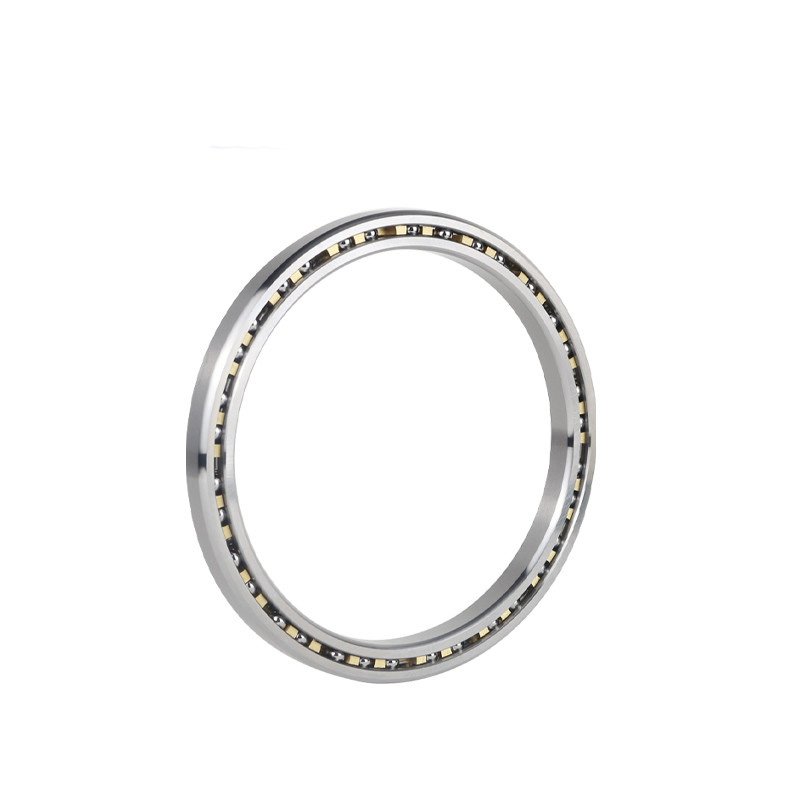
In the actual application of collaborative robots, the working environment is complex and changeable, and the bearing needs to adapt to the characteristics of frequent start-stop, variable load operation and small space layout of the robot. Therefore, bearings for collaborative robot have extremely strict requirements in terms of structural design and performance indicators. Thin-walled structural design is the mainstream direction of such bearings, which can effectively reduce the volume and weight of the robot joint while ensuring the bearing capacity, making the collaborative robot more flexible in movement and more convenient in deployment. Taking the finger joint and wrist joint of collaborative robot with limited installation space as an example, the ultra-thin cross roller bearing with a thickness of only a few millimeters can still bear a large axial load, perfectly solving the contradiction between space limitation and load demand.
On the performance level, high precision, low noise and high rigidity are the core attributes of bearings for collaborative robot. The repeated positioning accuracy of collaborative robot in the process of human-machine collaboration is directly related to the production efficiency and product quality, which requires the bearing to control the axial and radial runout within an extremely small range, and the precision level is even up to P2 or higher. At the same time, the low noise performance of the bearing can improve the human-machine interaction experience, making the collaborative robot more suitable for application scenarios such as assembly workshops and electronic processing workshops with high environmental requirements. The high rigidity of the bearing can effectively reduce the elastic deformation of the robot joint during operation, ensure the stability of the robot’s end operation, and avoid the impact of deformation on the operation accuracy. In addition, bearings for collaborative robot also need to have excellent wear resistance and fatigue resistance, which can maintain stable performance for a long time under the condition of continuous operation, reduce the maintenance frequency of the robot and lower the overall operation cost of the enterprise.
The material selection and manufacturing process of bearings for collaborative robot are the key to ensuring their performance. High-quality bearing steel such as 42CrMo alloy steel is the common raw material, and through special heat treatment processes such as quenching and tempering, the material’s hardness, strength and wear resistance are comprehensively improved, making the bearing able to withstand the impact of variable loads in the operation of collaborative robots. For some special application scenarios, such as clean workshops in the electronic and semiconductor industries, ceramic mixed bearings or polymer bearings are also used to reduce the friction coefficient of the bearing and reduce the particle release during operation, meeting the clean requirements of the working environment. In the manufacturing process, the precision grinding and fine processing of the bearing raceway and rolling elements can optimize the contact state between the rolling elements and the raceway, reduce the friction loss during operation, and further improve the rotation efficiency and service life of the bearing.
With the rapid development of intelligent manufacturing, the application scenarios of collaborative robots are constantly expanding, from the traditional automotive manufacturing and electronic assembly industries to the medical care, logistics sorting, food processing and other fields, which puts forward more diversified and personalized requirements for bearings for collaborative robot. In the medical robot field, the bearing needs to have the characteristics of miniaturization and high precision to adapt to the fine operation of the medical robot; in the logistics sorting field, the bearing needs to have stronger impact resistance to adapt to the high-intensity and high-frequency operation of the robot. In response to these diversified demands, bearing manufacturers are constantly innovating and optimizing product solutions, such as the design of adjustable preload force, which can effectively absorb the elastic deformation of the robot during transmission and improve the operation stability; the optimization of the raceway curvature radius can further improve the bearing capacity and rotation precision of the bearing.
The global market demand for bearings for collaborative robot is showing a rapid growth trend, driven by the in-depth promotion of Industry 4.0 and the continuous improvement of the automation level of various industries. The Asia-Pacific region has become the largest consumer market for such bearings, with the rapid development of manufacturing industry in China, India and other countries driving the continuous growth of demand. European and American markets, relying on their technical advantages in high-end manufacturing, have high requirements for the precision and performance of bearings for collaborative robot, and are the main market for high-end products. In the market competition pattern, international bearing giants have obvious advantages in the high-end market with their advanced technology and brand advantages, while local bearing manufacturers in various countries are constantly breaking through core technologies, realizing the localization substitution of medium and high-end products, and gradually increasing their market share with high cost performance.
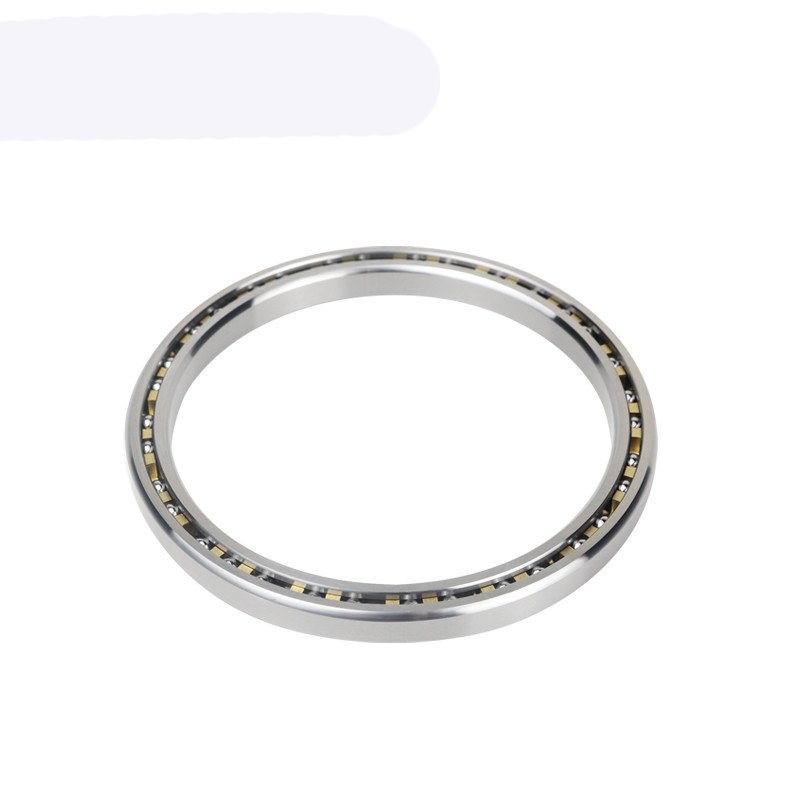
In the future, with the deep integration of artificial intelligence, Internet of Things and other technologies with collaborative robots, bearings for collaborative robot will also develop towards the direction of intelligence, integration and greenization. The integration of sensor technology into the bearing can realize the real-time monitoring of the bearing’s operating state, such as temperature, vibration and wear, and realize the predictive maintenance of the bearing through data analysis, which can effectively avoid the sudden failure of the collaborative robot and improve the operation efficiency of the equipment. The modular design of the bearing will make the installation and replacement of the robot joint more convenient, shorten the maintenance cycle and reduce the maintenance cost. At the same time, under the background of global low-carbon development, bearing manufacturers will also pay more attention to the green manufacturing process, reduce energy consumption and material waste in the production process, and realize the sustainable development of the industry.
As the core component of collaborative robots, bearings for collaborative robot are an important foundation for the development of collaborative robot industry. With the continuous expansion of the application scenarios of collaborative robots and the continuous improvement of performance requirements, the research and development and manufacturing level of bearings for collaborative robot will also face higher challenges and opportunities. Bearing manufacturers need to keep close to the market demand, increase research and development investment, break through core technical bottlenecks, and provide more high-performance, diversified and intelligent bearing solutions for the development of the collaborative robot industry. At the same time, the whole industry chain needs to strengthen collaborative innovation, promote the upgrading of raw material production, manufacturing process and testing technology, and jointly promote the high-quality development of the bearings for collaborative robot industry, so as to provide stronger support for the development of global intelligent manufacturing.