

In industrial automation and robotic systems, bearings for robot arm are more than just motion components—they are the core of positioning accuracy, operational stability, and service life. Every joint, rotation, and linear movement depends on high-performance bearings to maintain repeatability, reduce backlash, and support complex loads. This guide covers the most widely used bearing types, key selection factors, real-world applications, and maintenance best practices to help engineers, designers, and maintenance teams choose the right bearings for robotic arms.
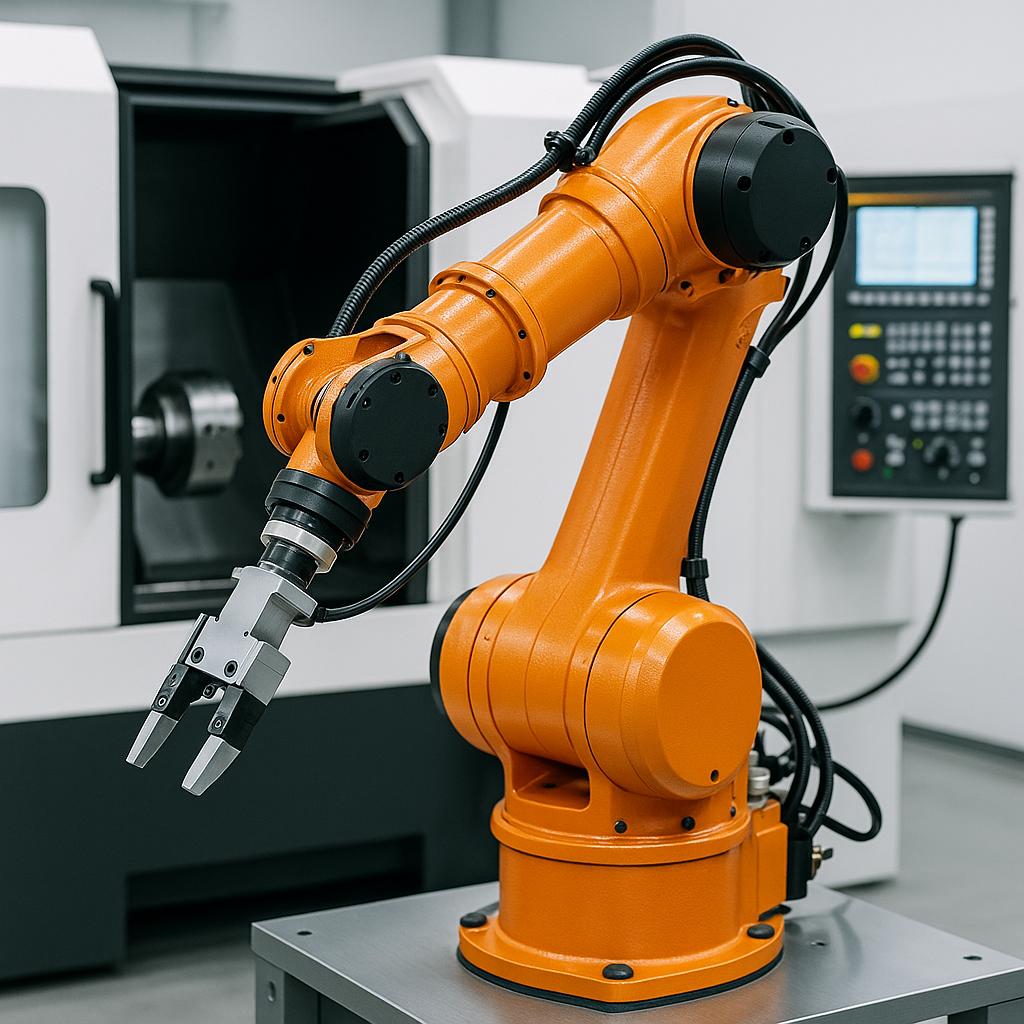
Why Bearings Are Critical for Robot Arm Performance
Robotic arms operate under dynamic loads, high-frequency start-stop cycles, and strict precision demands. Low-quality or mismatched bearings quickly lead to positioning errors, increased friction, vibration, noise, and premature failure. Upgrading to precision robotic arm bearings delivers clear benefits:
Ultra-high precision: Minimizes backlash and ensures consistent repeatability to ±0.01mm.
High rigidity: Resists deflection under heavy payloads and complex multi-directional loads.
Smooth motion: Low friction reduces energy use, heat buildup, and wear.
Long service life: Stable operation in 24/7 production lines lowers maintenance and downtime.
Compact design: Slim profiles fit tight joint spaces while maximizing load capacity.
Top 6 Bearing Types for Robot Arms
Each bearing type is engineered for specific joint functions, load profiles, and precision needs.
- Crossed Roller Bearings
The first choice for precision robotic joints. Cylindrical rollers cross at 90° to handle radial, axial, and moment loads in one unit.
Best for: Robot base, shoulder, wrist joints, rotary tables, and end-effectors.
Key advantages: High rigidity, minimal deflection, zero clearance, 360° smooth rotation.
Typical use: Heavy-duty industrial robots, collaborative robots, and medical robotics. - Thin-Section Bearings
Ultra-slim profile with consistent cross-section, lightweight and space-saving.
Best for: Compact joints, collaborative robots, and end-effectors.
Key advantages: 50% lighter than standard bearings, flexible sizing, hollow shaft for cable routing.
Typical use: Small-to-medium robotic arms where weight and space are limited. - Angular Contact Ball Bearings
Handle combined radial and axial loads; often paired or preloaded for extra rigidity.
Best for: Servo motors, reducer inputs, high-speed rotary joints.
Key advantages: High-speed capability, precise torque control, low friction.
Typical use: Assembly robots, delta robots, and pick-and-place systems. - Needle Roller Bearings
High load capacity in a small radial space with line-contact design.
Best for: Compact, high-load joints, grippers, and actuators.
Key advantages: Shock resistance, stiffness in confined spaces.
Typical use: Industrial robot elbows and custom actuators. - Linear Bearings & Guides
Enable smooth, precise linear motion in gantry and Cartesian robots.
Best for: Linear slides, Z-axis movement, transfer systems.
Key advantages: Low friction, high positioning accuracy, long travel.
Typical use: Packaging, material handling, and CNC-integrated robots. - Harmonic Drive & Special-Purpose Bearings
Designed for harmonic reducers in lightweight and precision robots.
Best for: Flexible joints, reducers, and high-precision actuators.
Key advantages: High torque density, zero backlash, ultra-smooth motion.
Typical use: Medical robots, laboratory automation, and aerospace robotics.
How to Select the Right Bearings for Robot Arm
Follow these practical criteria to avoid mismatches and failures: - Load Type & Magnitude
Radial load: Deep groove ball bearings, cylindrical roller bearings.
Axial load: Thrust bearings, angular contact bearings.
Combined & moment loads: Crossed roller bearings, tapered roller bearings. - Precision & Repeatability
Standard precision: General handling robots (ABEC 1–3).
High precision: Assembly, inspection, and collaborative robots (ABEC 5–7).
Ultra-precision: Medical, semiconductor, and aerospace robots (ABEC 9+). - Speed & Friction
High-speed joints: Angular contact ball bearings, ceramic hybrid bearings.
Low-speed, high-load: Crossed roller bearings, needle roller bearings. - Mounting Space & Weight
Compact joints: Thin-section bearings, needle roller bearings.
Weight-sensitive designs: Lightweight thin-section or aluminum-cage bearings. - Environment & Sealing
Dust/moisture: Sealed or shielded bearings, IP64+ protection.
Extreme temps: Stainless steel, ceramic, or high-temperature lubrication.
Cleanroom: Low-outgassing, clean-lubricated special bearings.
Real-World Applications of Bearings for Robot Arm
Industrial assembly robots: Crossed roller + angular contact bearings for welding, fastening, and assembly.
Collaborative robots (cobots): Thin-section and lightweight bearings for safety and flexibility.
Medical & lab robots: Ultra-precision, low-noise, cleanroom-compatible bearings.
Logistics & packaging robots: Linear guides and heavy-duty roller bearings for sorting and palletizing.
Semiconductor robots: Ceramic hybrid and vacuum-compatible bearings for high-purity environments.
Installation & Maintenance Tips for Long Life
Preload properly: Preloaded crossed roller and angular contact bearings eliminate backlash.
Correct lubrication: Use low-friction, long-life grease suited to speed and temperature.
Clean installation: Assemble in a dust-free environment to avoid contamination.
Regular inspection: Check for heat, vibration, noise, and positioning drift.
Avoid overload: Stay within dynamic and static load ratings to prevent raceway damage.
Conclusion
Bearings for robot arm define the accuracy, speed, and reliability of modern robotic systems. Choosing the right type—crossed roller, thin-section, angular contact, linear, or special-purpose—directly improves productivity and reduces total cost of ownership. Whether designing a new robotic arm or retrofitting for better performance, prioritize precision, load capacity, and environmental compatibility.
Working with a professional bearing supplier ensures customized solutions for your robot arm’s joints, payloads, and working conditions. With the right bearings, your robotic arm operates smoothly, accurately, and reliably for years.
SEO Keywords (naturally integrated)
bearings for robot arm, robot arm bearings, precision bearings for robotic arms, crossed roller bearing robot arm, thin section bearings for robot arm, angular contact ball bearing robot joint, linear bearings for robotic arm, industrial robot arm bearings, collaborative robot bearings, high precision robot arm bearings