

When it comes to high-precision, heavy-load rotational applications in industrial equipment, the cross roller bearing RU series stands out as a reliable and efficient solution. Designed with an integrated inner and outer ring structure, this series addresses the core pain points of traditional bearings—such as low rigidity, poor precision retention, and complex installation—making it a preferred choice for engineers and procurement professionals across industries like robotics, machine tools, and automation.
In this comprehensive guide, we’ll break down everything you need to know about the cross roller bearing RU series: its unique design features, key advantages, common models, practical applications, and how to select the right RU series bearing for your specific project. Whether you’re new to cross roller bearings or looking to optimize your existing equipment with higher-performance components, this article will provide actionable insights backed by industry experience.
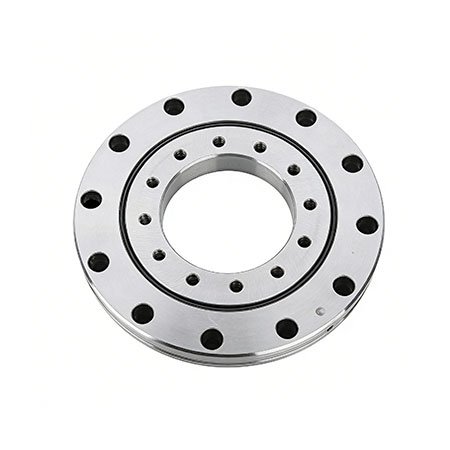
What Is a Cross Roller Bearing RU Series?
The cross roller bearing RU series is a type of crossed roller bearing characterized by its integrated inner and outer ring design—unlike other cross roller models (such as RB or RE series) that feature separable rings. This integrated structure means the inner and outer rings are one-piece, eliminating the need for additional assembly steps and ensuring better structural stability during operation.
Inside the bearing, cylindrical rollers are arranged perpendicular to each other in a V-shaped raceway, which is the defining “crossed” feature of this bearing type. This arrangement allows the RU series to bear radial loads, axial loads, and moment loads simultaneously—all within a compact design. Unlike traditional ball bearings, which have limited load-carrying capacity and rigidity, the RU series’ roller contact design distributes loads evenly, reducing stress concentration and extending service life.
Another key detail of the RU series is its compatibility with standard mounting configurations. Most models come with pre-drilled holes in the inner and outer rings, making it easy to mount directly to equipment housings or shafts without custom adapters. This design not only simplifies installation but also reduces assembly time and labor costs for industrial projects.
Key Advantages of the Cross Roller Bearing RU Series
The RU series has gained widespread popularity in industrial applications due to its unique combination of precision, rigidity, and ease of use. Below are the most notable advantages that set it apart from other bearing series:
- Exceptional Rigidity and Load Capacity
Thanks to the crossed roller arrangement and integrated ring structure, the RU series offers 3 to 4 times higher rigidity compared to conventional ball bearings and even some other cross roller models. The cylindrical rollers have a larger contact area with the raceway, allowing the bearing to handle heavy radial, axial, and moment loads without deformation. This makes the RU series ideal for high-load applications like heavy-duty machine tools, robotic arms, and precision measuring equipment.
- High Precision and Stability
Precision is critical in industrial applications, and the RU series delivers on this front. The integrated inner and outer rings minimize dimensional deviations caused by assembly, while the crossed roller design ensures smooth, consistent rotation with minimal runout. Most RU series bearings have a precision class of P5 or higher, making them suitable for applications that require tight tolerances—such as CNC machine tools, semiconductor manufacturing equipment, and optical instruments.
- Compact Design, Space-Saving
Industrial equipment is often limited by space, and the RU series’ compact structure addresses this challenge. By combining the functions of multiple bearings (radial, axial, and moment load-bearing) into a single unit, the RU series eliminates the need for multiple bearing assemblies. This not only saves space but also reduces the overall weight of the equipment, making it easier to integrate into compact designs like small robotic joints or portable precision instruments.
- Easy Installation and Low Maintenance
Unlike separable cross roller bearings (which require careful alignment during assembly), the RU series’ integrated rings simplify installation significantly. The pre-drilled mounting holes ensure accurate positioning, and the one-piece design reduces the risk of assembly errors. Additionally, the RU series is designed for low maintenance—its sealed structure (available in most models) prevents dust, debris, and lubricant leakage, extending the bearing’s service life and reducing downtime for maintenance.
- Wide Temperature and Speed Adaptability
The RU series is engineered to perform reliably in harsh industrial environments. With high-quality materials (typically high-carbon chromium steel or stainless steel) and advanced heat treatment processes, these bearings can operate in temperatures ranging from -20°C to 120°C (depending on the lubricant used). They also maintain stable performance at moderate to high speeds, making them suitable for applications like high-speed rotary tables and automated conveyor systems.
Common Models of Cross Roller Bearing RU Series
The RU series includes a range of models to suit different application requirements, with variations in inner diameter (d), outer diameter (D), width (B), and load capacity. Below are some of the most commonly used models in industrial applications, along with their key specifications (note: specifications may vary by manufacturer):
- RU42: Inner diameter (d) = 160mm, Outer diameter (D) = 295mm, Width (B) = 35mm, Weight = 11.4kg – Suitable for heavy-duty machine tools and large robotic arms.
- RU66: Compact model with smaller dimensions, ideal for small to medium-sized automation equipment and precision instruments.
- RU85: Balanced load capacity and size, widely used in CNC rotary tables and semiconductor manufacturing equipment.
- RU124: Larger outer diameter and width, designed for high-moment-load applications like industrial robots and heavy-duty conveyors.
- RU148/RU178: High-precision models with P4/P5 class tolerance, suitable for optical instruments and precision measuring equipment.
- RU228: Heavy-duty model with maximum load capacity, ideal for large-scale industrial machinery and offshore equipment.
When selecting an RU series model, it’s important to match the bearing’s dimensions and load capacity to your equipment’s requirements. Always refer to the manufacturer’s technical datasheet for detailed specifications, including load ratings, speed limits, and temperature ranges.
Practical Applications of Cross Roller Bearing RU Series
The versatility and performance of the RU series make it suitable for a wide range of industrial applications. Below are the most common industries and use cases where the RU series excels:
- Industrial Robotics
Robotic arms and joints require high precision, rigidity, and compact design—all of which the RU series provides. The RU series is commonly used in robotic wrists, elbows, and bases, where it handles the complex combination of radial, axial, and moment loads generated by the robot’s movement. Its high precision ensures smooth, accurate positioning, which is critical for tasks like pick-and-place, welding, and assembly.
- Machine Tools
CNC machine tools, milling machines, and lathes require bearings that can handle heavy loads and maintain high precision during high-speed operation. The RU series is used in rotary tables, spindles, and tool changers, where its rigidity and load capacity prevent deformation and ensure consistent machining accuracy. This helps reduce scrap rates and improve overall production efficiency.
- Automation and Conveyor Systems
Automated conveyor systems, rotary indexes, and packaging equipment rely on bearings that can operate continuously at moderate speeds with minimal maintenance. The RU series’ sealed design and low friction ensure long service life, while its compact size makes it easy to integrate into conveyor rollers and rotary components.
- Precision Measuring and Optical Equipment
Instruments like coordinate measuring machines (CMMs), optical comparators, and laser measuring tools require ultra-high precision bearings to ensure accurate measurements. The RU series’ high precision class (P4/P5) and minimal runout make it ideal for these applications, where even small deviations can affect measurement results.
- Heavy-Duty Industrial Machinery
Large-scale equipment like offshore wind turbines, mining machinery, and steel rolling mills require bearings that can handle extreme loads and harsh environments. The RU series’ heavy-duty models (such as RU228) are designed to withstand these conditions, with high-quality materials and sealed structures that protect against dust, moisture, and corrosion.
How to Select the Right Cross Roller Bearing RU Series for Your Project
Selecting the correct RU series bearing is critical to ensuring optimal performance and extending the service life of your equipment. Below is a step-by-step guide to help you make the right choice:
Step 1: Determine Your Load Requirements
First, calculate the radial load, axial load, and moment load that the bearing will need to handle. This includes both static loads (when the equipment is stationary) and dynamic loads (when the equipment is in operation). Refer to the manufacturer’s load rating tables to select a model that can accommodate these loads—always leave a safety margin of 15-20% to account for unexpected load fluctuations.
Step 2: Check Dimensional Compatibility
Measure the available space in your equipment (shaft diameter, housing bore, and width) and match it to the RU series model’s dimensions (d, D, B). Ensure that the bearing’s mounting holes align with your equipment’s mounting points—most RU series models have standard hole patterns, but custom configurations are available from some manufacturers if needed.
Step 3: Consider Precision Requirements
Determine the precision class you need based on your application. For general industrial applications, a P5 class bearing is sufficient. For high-precision applications like optical instruments or CNC machine tools, opt for a P4 class bearing. Keep in mind that higher precision bearings may come with a higher cost, so balance precision needs with budget constraints.
Step 4: Evaluate Environmental Conditions
Consider the operating environment of your equipment. If it will be exposed to dust, moisture, or corrosive substances, select an RU series bearing with a sealed structure (such as 2RS or ZZ seals) and corrosion-resistant materials (like stainless steel). If the equipment operates at high temperatures, choose a bearing with high-temperature lubricant and heat-resistant materials.
Step 5: Choose a Reliable Manufacturer
The quality of the bearing depends heavily on the manufacturer. Look for manufacturers with a proven track record in producing cross roller bearings, and check for certifications like ISO 9001 to ensure consistent quality. Additionally, choose a manufacturer that offers technical support and after-sales service—this can be invaluable if you need help with installation, maintenance, or troubleshooting.
Maintenance Tips for Cross Roller Bearing RU Series
Proper maintenance is key to extending the service life of your RU series bearing and ensuring optimal performance. Below are some practical maintenance tips:
- Lubrication: Regularly lubricate the bearing with the appropriate lubricant (grease or oil) based on the operating speed and temperature. Over-lubrication can cause overheating, while under-lubrication can lead to increased friction and wear. Follow the manufacturer’s recommendations for lubrication frequency and quantity.
- Cleaning: Periodically clean the bearing and its surrounding area to remove dust, debris, and old lubricant. Use a soft brush or cloth—avoid using harsh chemicals that can damage the bearing’s seals or raceway.
- Inspection: Regularly inspect the bearing for signs of wear, such as abnormal noise, vibration, or temperature rise. If you notice any of these signs, stop the equipment immediately and check the bearing for damage. Replace the bearing if necessary to prevent further damage to your equipment.
- Storage: If the bearing is not in use, store it in a clean, dry environment with a temperature between 0°C and 25°C. Avoid storing it in direct sunlight or near corrosive substances, and keep it in its original packaging to prevent dust and moisture from entering.
Conclusion
The cross roller bearing RU series is a high-performance, versatile solution for industrial applications that require precision, rigidity, and compact design. Its integrated inner and outer ring structure, crossed roller arrangement, and ease of installation make it a preferred choice for engineers and procurement professionals across industries like robotics, machine tools, and automation.
By understanding the RU series’ key features, advantages, common models, and applications, you can select the right bearing for your project and ensure optimal performance. Remember to follow proper maintenance practices to extend the bearing’s service life and reduce downtime. If you have any questions about the RU series or need help selecting a model, consult with a reliable bearing manufacturer or technical expert—their expertise can help you make the best decision for your specific application.
Whether you’re upgrading existing equipment or designing a new project, the cross roller bearing RU series delivers the performance and reliability you need to keep your operations running smoothly.