

When it comes to precision mechanical components, choosing the right bearing can make or break the performance, durability, and efficiency of your equipment. Two popular options for applications requiring axial, radial, and moment load support are cross roller bearings and four point contact bearings. While they may seem similar at first glance, their unique designs, performance characteristics, and ideal use cases set them apart significantly.
In this guide, we’ll break down the critical differences between cross roller bearings and four point contact bearings, compare their strengths and weaknesses, and help you determine which one is the best fit for your specific application—whether you’re working with robotics, heavy machinery, or precision industrial equipment. No jargon overload, just clear, practical insights to simplify your selection process.
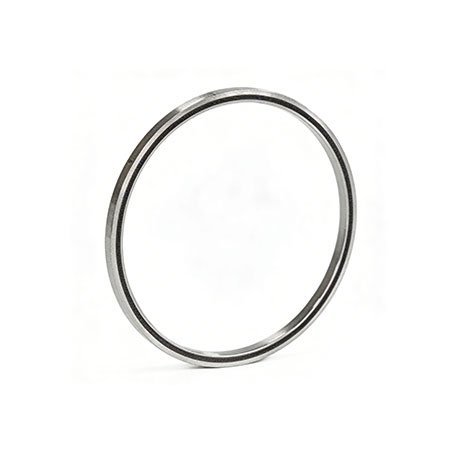
What Is a Cross Roller Bearing?
A cross roller bearing (also known as a crossed roller bearing) is a specialized rolling element bearing designed to handle combined axial, radial, and moment loads simultaneously. Its defining feature is the arrangement of cylindrical rollers in a crisscross (or “X”) pattern between two ring-shaped raceways—typically an inner and outer ring with V-shaped grooves that guide the rollers.
Each roller is positioned at a 90-degree angle to its adjacent rollers, which allows the bearing to distribute loads evenly across its structure. This unique configuration eliminates gaps between the rollers and raceways, resulting in minimal backlash and exceptional rigidity. Most cross roller bearings use spacers or retainers to keep the rollers separated, reducing friction and wear while ensuring smooth rotation.
Manufactured from high-strength materials like chrome steel or stainless steel, cross roller bearings undergo precision machining and heat treatment to withstand heavy loads without compromising accuracy. They’re available in various configurations, including sealed designs for harsh environments and gear-integrated models for direct drive applications.
What Is a Four Point Contact Bearing?
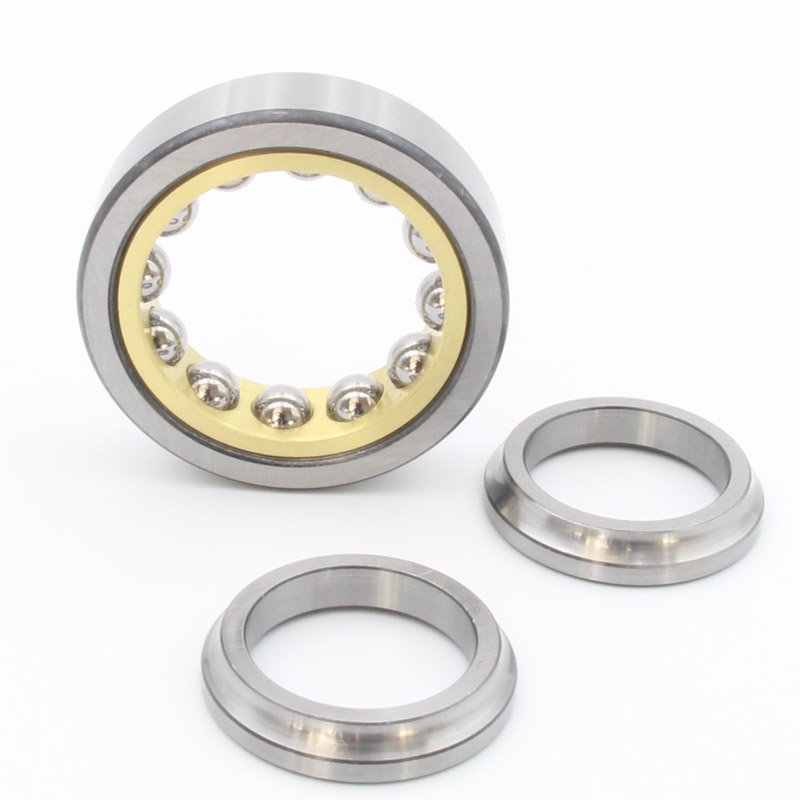
A four point contact bearing is a type of angular contact ball bearing that uses spherical rolling elements (balls) instead of rollers. Its name comes from the four contact points between each ball and the inner/outer raceways—each ball touches the raceways at two points on the inner ring and two points on the outer ring, creating a stable, balanced load distribution.
Unlike cross roller bearings, four point contact bearings have a single row of balls and a contact angle (typically 35 degrees) that enables them to handle both axial and radial loads, as well as moment loads in both directions. The inner ring is often split into two parts, making the bearing separable and easier to install and maintain. Brass cages are commonly used to hold the balls in place, reducing friction and ensuring consistent performance.
Four point contact bearings are known for their compact design and high rotational speed capabilities, making them a popular choice for applications where space is limited and smooth, fast rotation is required.
Cross Roller Bearing vs Four Point Contact Bearing: Key Differences
To understand which bearing is right for you, let’s compare them side by side across the most critical factors: design, load capacity, precision, speed, rigidity, and maintenance.
- Design & Construction
Cross Roller Bearing: Features cylindrical rollers arranged in a crisscross pattern between two V-grooved raceways (inner and outer rings). Rollers are separated by spacers/retainers to prevent contact and reduce friction. The integrated, non-separable design (in most cases) ensures high rigidity and minimal backlash. Some models include seals or gears for added functionality.
Four Point Contact Bearing: Uses a single row of spherical balls with four contact points (two per raceway). The inner ring is split into two parts, making the bearing separable. Brass cages hold the balls in place, and the raceways are designed with a specific contact angle to handle combined loads. The compact, single-row design saves space compared to some roller bearing alternatives.
- Load Capacity
Cross Roller Bearing: Excels at handling heavy combined loads (axial, radial, and moment). The cylindrical rollers have a larger contact area with the raceways than balls, allowing them to distribute heavy loads more effectively. This makes cross roller bearings ideal for applications with high load demands, such as heavy machinery, robotics, and precision industrial equipment.
Four Point Contact Bearing: Handles moderate combined loads well but is not designed for extreme heavy loads. The spherical balls have a smaller contact area, which limits their load-carrying capacity compared to cross roller bearings. They perform best in applications with moderate axial and radial loads, such as light to medium-duty machinery, cranes, and rotating platforms.
- Precision & Backlash
Cross Roller Bearing: Offers exceptional precision and minimal backlash (often near-zero). The crisscross roller arrangement eliminates gaps between the rollers and raceways, ensuring tight tolerances and accurate rotational positioning. This makes them perfect for high-precision applications like robotics, CNC machine tools, and semiconductor manufacturing equipment.
Four Point Contact Bearing: Provides good precision but not as high as cross roller bearings. The use of spherical balls creates slightly more backlash, and the separable inner ring can introduce minor alignment variations. They are suitable for applications where moderate precision is sufficient, such as conveyors, small motors, and light-duty rotating equipment.
- Rotational Speed
Cross Roller Bearing: Lower maximum rotational speed compared to four point contact bearings. The cylindrical rollers create more friction than spherical balls, which limits their speed capabilities. They are best suited for low to moderate speed applications, such as robotics joints, precision turntables, and heavy machinery with slow rotational motion.
Four Point Contact Bearing: High rotational speed capabilities. The spherical balls have less contact friction with the raceways, allowing them to spin faster without overheating or excessive wear. This makes them ideal for high-speed applications like electric motors, fans, and light-duty rotating platforms.
- Rigidity
Cross Roller Bearing: Extremely high rigidity. The crisscross roller arrangement and large contact area create a stable structure that resists deformation under load. This rigidity is critical for applications where structural stability is essential, such as precision machine tools and robotics arms that require precise movement without flexing.
Four Point Contact Bearing: Moderate rigidity. The smaller contact area of the balls means they are more prone to slight deformation under heavy loads, reducing overall rigidity. They work well in applications where rigidity is not the primary concern, such as light-duty machinery and non-precision rotating components.
- Maintenance & Durability
Cross Roller Bearing: Low maintenance requirements due to their sealed design (in most cases) and even load distribution. The high-quality materials and precision machining ensure long service life, even in harsh environments. However, if maintenance is needed, the non-separable design can make it more difficult to disassemble and service.
Four Point Contact Bearing: Easy maintenance thanks to the separable inner ring, which allows for quick disassembly, inspection, and lubrication. They are also durable but may wear faster than cross roller bearings in heavy-load or high-vibration applications. Regular lubrication is key to extending