

Cross roller bearings, a type of high-precision rolling bearing, feature cylindrical rollers arranged perpendicularly in a V-shaped raceway. This unique cross arrangement enables them to withstand radial, axial, and moment loads simultaneously—setting them apart from traditional bearings. Renowned for exceptional rigidity and rotational accuracy, they have become a cornerstone in precision-driven industries. This article delves into their key benefits, top applications, and expert selection advice to help you make informed decisions.
Key Advantages of Cross Roller Bearings
The standout benefit of cross roller bearings is their superior load-bearing capacity. The crossed roller design distributes loads evenly across the raceway, allowing a single bearing to replace multiple conventional bearings in complex assemblies. This not only simplifies design but also reduces overall equipment size.
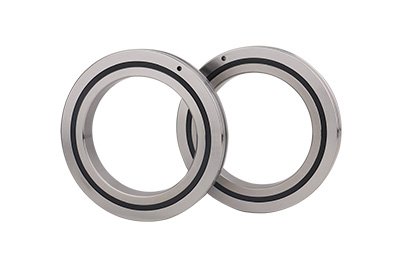
Another critical advantage is high rotational precision. Tight manufacturing tolerances and minimal internal clearance ensure stable rotation with low runout—essential for applications requiring pinpoint accuracy. Additionally, their compact structure offers space-saving benefits, making them ideal for equipment where installation space is limited. Many models also feature corrosion-resistant coatings or stainless steel construction, enhancing durability in harsh environments like food processing or marine settings.
Prime Applications of Cross Roller Bearings
Cross roller bearings excel in precision-critical industries, with these top use cases:
- Robotics & Automation: Used in robotic joints, manipulators, and rotating platforms, providing stable support for repetitive, high-precision movements.
- Machine Tools: Integrated into CNC router spindles, rotary tables, and grinding machine axes, ensuring accurate machining and consistent performance.
- Medical Equipment: Found in CT scanners, surgical robots, and diagnostic imaging devices, where precision and reliability directly impact patient care.
- Aerospace & Defense: Applied in satellite antenna rotators, aircraft landing gear components, and radar systems, withstanding extreme loads and environmental conditions.
Expert Selection Tips for Cross Roller Bearings
When selecting cross roller bearings, focus on load magnitude and type (radial, axial, or combined moment loads), rotational speed, and environmental factors (temperature, moisture, debris). For high-speed applications, choose bearings with optimized cage designs to reduce friction. For corrosive environments, opt for stainless steel materials with IP-rated sealing.
Partnering with reputable suppliers ensures access to bearings that meet industry standards (such as ISO 9001). Investing in quality cross roller bearings boosts equipment longevity and minimizes downtime—critical for maximizing operational efficiency.