

In the realm of precision engineering and automated systems, harmonic drive bearings stand as a critical component that bridges accuracy, compactness, and high torque transmission. Designed specifically to pair with harmonic drive reducers, these specialized bearings are the unsung heroes behind the smooth, precise movements of industrial robots, aerospace equipment, and medical devices—applications where even the smallest deviation can derail performance. This guide unpacks the core value, key features, and real-world uses of harmonic drive bearings, giving engineers and buyers the insights they need to choose the right component for their precision motion projects.
What Are Harmonic Drive Bearings?
Harmonic drive bearings, also called flexspline bearings, are precision radial bearings engineered to work seamlessly with harmonic drive systems. Unlike standard bearings that focus solely on reducing rotational friction, these bearings are built to withstand the unique “elastic deformation” motion of harmonic drives—where a flexible spline (flexspline) meshes with a rigid spline (circular spline) via a wave generator.
Their design prioritizes high radial rigidity and low runout, with thin-wall construction that fits the compact footprint of harmonic drive reducers. Most harmonic drive bearings use high-grade chrome steel or stainless steel for raceways and rollers, ensuring durability even under repeated cyclic loads. Sealed versions are also available, protecting internal components from dust and lubricant leakage in harsh industrial environments.
Key Advantages of Harmonic Drive Bearings
What sets harmonic drive bearings apart from conventional bearings? Their benefits are tailored to the exact demands of precision motion control:
Exceptional Precision & Low Backlash
Precision-ground raceways and tight tolerance manufacturing minimize rotational backlash, a must for applications like robotic joint positioning or CNC machine tool axes where repeatable accuracy is non-negotiable.
High Torque Density in Compact Sizes
Their thin-wall design allows harmonic drive systems to deliver high torque output without increasing overall size—ideal for space-constrained equipment like surgical robots or satellite positioning mechanisms.
Superior Radial Rigidity
Even under heavy radial loads, harmonic drive bearings maintain shape and alignment, preventing flexspline distortion that could reduce drive efficiency or shorten service life.
Long Service Life Under Cyclic Loads
Optimized roller profiles and lubrication compatibility reduce wear from the harmonic drive’s repetitive flexing motion, extending bearing lifespan and cutting maintenance costs.
Common Applications of Harmonic Drive Bearings
Harmonic drive bearings are not one-size-fits-all—they are purpose-built for industries where precision and reliability are paramount:
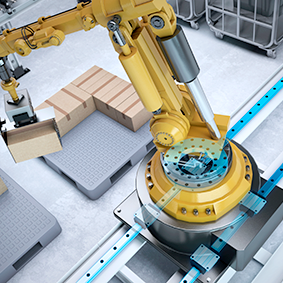
Industrial Robotics: Used in robotic arm joints and end-effectors, enabling smooth, precise movements for pick-and-place, assembly, and welding tasks.
Aerospace & Defense: Integrated into satellite antenna positioning systems and missile guidance mechanisms, where lightweight, high-precision motion is critical.
Medical Devices: Found in surgical robots and diagnostic equipment, supporting sterile, accurate movements that protect patient safety.
CNC Machinery: Paired with harmonic drive reducers in rotary tables and linear axes, ensuring consistent machining accuracy for complex parts.
How to Choose the Right Harmonic Drive Bearing
Selecting the optimal harmonic drive bearing boils down to three key considerations:
Match Tolerance Grade to Application
For ultra-precision uses (e.g., medical robots), choose P2 or P4 precision grades. For general industrial automation, P5 or P6 grades strike a balance between accuracy and cost.
Check Compatibility with Harmonic Drive Models
Ensure the bearing’s inner diameter, outer diameter, and width align with your harmonic drive reducer’s flexspline size—mismatched dimensions will cause performance issues.
Consider Environmental Conditions
Opt for sealed bearings for dusty or humid environments; choose stainless steel variants for corrosive settings like food processing or marine applications.
Final Takeaway
Harmonic drive bearings are more than just a supporting part—they are the foundation of reliable, precise motion in modern automated systems. By combining compact design, high rigidity, and low backlash, they enable harmonic drives to deliver their full potential in the most demanding applications. Whether you’re upgrading a robotic system or designing a new precision machine, choosing the right harmonic drive bearing is the first step toward unlocking consistent, high-performance motion control.