

In the world of industrial automation and precision machinery, harmonic drive bearings stand as an unsung hero—quietly enabling the pinpoint accuracy and reliable performance that modern technology demands. These specialized bearings are not just components; they’re the backbone of harmonic drive reducers, the systems that power everything from industrial robot arms to life-saving medical devices. For engineers, manufacturers, and buyers alike, understanding how harmonic drive bearings work, their key applications, and what sets high-quality options apart is critical to building efficient, long-lasting equipment.
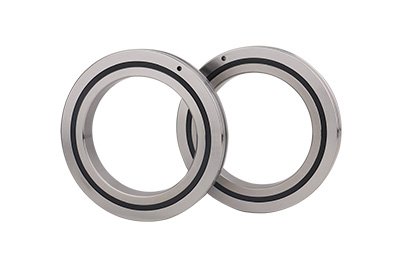
What Are Harmonic Drive Bearings, and How Do They Function?
At their core, harmonic drive bearings (often called flexible bearings in this context) are designed to handle the unique elastic deformation required by harmonic drive systems. A typical harmonic drive setup consists of three main parts: a wave generator, a flexible wheel (flexspline), and a rigid wheel (circular spline)—and the bearing is the linchpin that ties these components together 2. The inner ring of the bearing fits snugly onto the elliptical cam of the wave generator, while the outer ring attaches to the flexspline. As the wave generator rotates, the bearing flexes the outer ring, forcing the flexspline to engage with the rigid wheel’s teeth at two points.
This motion creates a high reduction ratio (often from 50:1 to 320:1) in a compact package—something traditional gearing can’t match 5. But what makes harmonic drive bearings unique is their ability to withstand both cyclic and alternating stress loads simultaneously. Unlike standard bearings, which operate with minimal deformation, these bearings are engineered to flex repeatedly without compromising strength or precision. This durability is why they’re the go-to choice for applications where consistency matters most.
Key Applications: Where Harmonic Drive Bearings Shine
Harmonic drive bearings thrive in scenarios that demand zero backlash, high positional accuracy, and compact design. The industrial robotics sector is the largest adopter—over 68% of robotic arms integrate harmonic drive systems, relying on these bearings to achieve positional accuracy of less than 1 arc-minute 1. For 6-axis robots, which need smooth, precise joint movement to handle delicate assembly or welding tasks, harmonic drive bearings ensure every motion is repeatable, even after thousands of cycles.
Beyond robotics, the medical industry relies heavily on these bearings for surgical robots. Over 54% of global robotic surgical systems use harmonic drive technology, where the bearing’s precision can mean the difference between successful minimally invasive procedures and complications 1. Semiconductor equipment is another fast-growing application: as wafer fabrication requires micro-level accuracy, harmonic drive bearings deliver the stable motion needed to handle tiny components without error.
Even extreme environments benefit from these bearings. They’re used in aerospace and space equipment—including China’s “Shenzhou” spacecraft series—where they withstand vacuum conditions, temperature fluctuations, and high vibration while maintaining performance 2. Machine tools, optical equipment, and printing machinery also rely on harmonic drive bearings to optimize efficiency and reduce downtime.
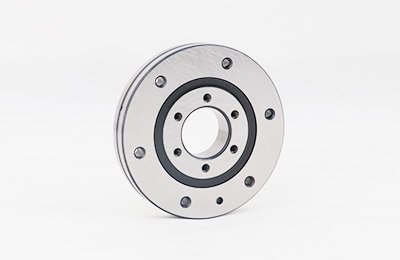
What to Look for in High-Quality Harmonic Drive Bearings
Not all harmonic drive bearings are created equal. The top manufacturers (like Japan’s Harmonic Drive Systems and Germany’s Harmonic Drive AG) dominate the high-end market, thanks to their expertise in materials and工艺 3. Here are the critical factors to evaluate when selecting bearings for your project:
- Material Quality: Premium bearings use特种 steel processed via vacuum induction melting and electroslag remelting—this boosts fatigue resistance by 30% compared to standard materials 3. Avoid bearings made with low-grade steel, which will fail prematurely under cyclic stress.
- Precision Manufacturing: The outer ring’s thin wall must be machined to tight tolerances to ensure consistent flexing. Look for bearings with positional accuracy down to 30 arc seconds for ultra-precise applications 5.
- Lubrication: For extreme environments (high temperature, clean rooms, or vacuum), specialized lubricants are a must. Bearings with food-grade or high-temperature lubricants will perform better in niche applications.
- Durability: High-quality bearings offer a service life of 10,000+ hours at rated loads. Check for test data on cyclic stress resistance—this is a better indicator of longevity than just load capacity.
The Global Market and Future Trends
The harmonic drive bearing market is growing rapidly, driven by the boom in robotics and automation. The global harmonic drive precision gear reducers market (which relies on these bearings) is projected to reach $2.24 billion by 2034, with a CAGR of 17.21% 1. Asia-Pacific leads the market, accounting for 61% of global share, thanks to China, Japan, and South Korea’s expanding robotics and semiconductor industries1.
A key trend is the rise of domestic manufacturers challenging international giants. Companies like China’s Lvde Harmonic are gaining market share with cost-effective options (priced at 1/2 to 1/3 of Japanese competitors) while closing the technology gap 3. However, the high-end market (precision ≤1 arc-minute, life ≥10,000 hours) still belongs to international players, who hold over 90% of the share 3. As人形 robots enter mass production—with each unit requiring 14-20 harmonic drive systems—demand for high-quality bearings will only increase.
Final Thoughts: Why Harmonic Drive Bearings Matter
Harmonic drive bearings are more than just mechanical components—they’re enablers of innovation. Without their ability to combine precision, durability, and compact design, the advanced robots, surgical systems, and semiconductor equipment we rely on today wouldn’t be possible. For engineers and buyers, investing in high-quality harmonic drive bearings isn’t just a cost decision—it’s a choice to build equipment that performs reliably, efficiently, and competitively.
Whether you’re designing a robotic arm for a factory floor, a surgical tool for a hospital, or a component for space exploration, the right harmonic drive bearing can make all the difference. By prioritizing material quality, precision, and durability, you’ll ensure your equipment stands up to the demands of even the most challenging applications.