

In the realm of precision engineering and industrial machinery, slim bearings (also known as thin section bearings) have emerged as indispensable components, especially in applications where space and weight are at a premium. Unlike standard bearings with thicker cross-sections, slim bearings are engineered to maintain high performance while minimizing dimensional footprint, making them a preferred choice for modern compact equipment. This comprehensive guide delves into the key types, core advantages, diverse applications, and essential buying considerations of slim bearings, helping you make informed decisions for your specific engineering needs.
What Are Slim Bearings? Key Characteristics Explained
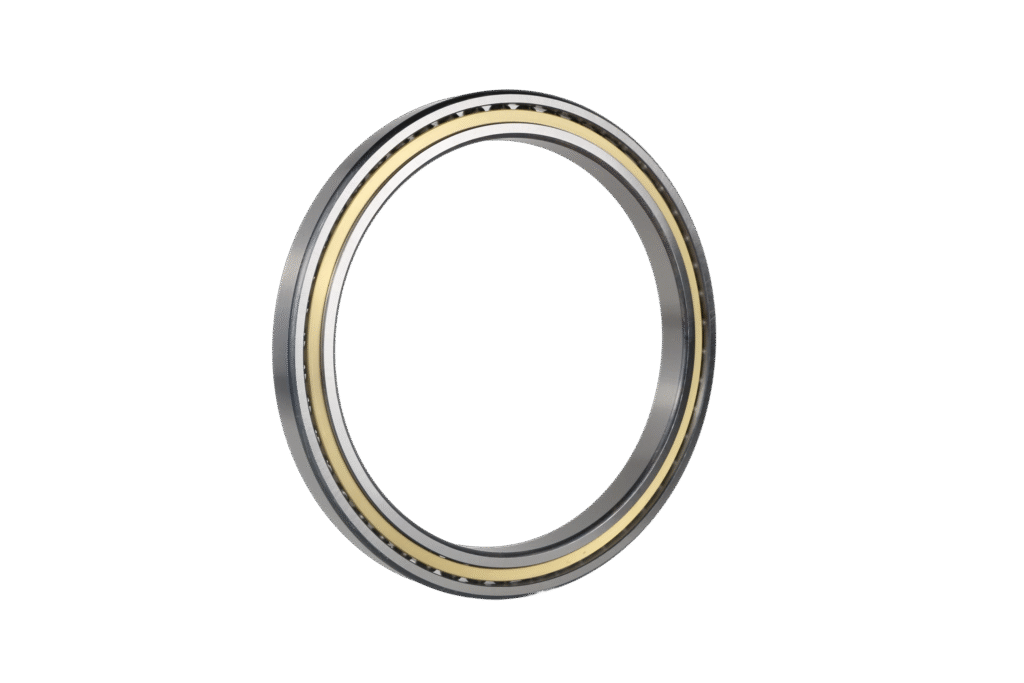
Slim bearings are a specialized category of precision rolling bearings defined by their extremely thin cross-sectional height relative to their diameter. A defining feature of these bearings is their constant cross-section regardless of the bore diameter—unlike conventional bearings, whose cross-sections increase proportionally with size. This unique design allows engineers to scale bearing sizes without compromising on space, enabling more compact and lightweight machinery designs.
Typically, slim bearings are available in both metric and inch series. Metric slim bearings cover a bore diameter range of 20mm to 360mm with cross-sections from 8×8mm to 20×20mm, while inch series options range from 3/4 inch to 40 inches in bore diameter, with cross-sections varying from 3/16×3/16 inch to 1×1 inch. They are manufactured using high-quality materials such as bearing steel (AISI 52100) and stainless steel (AISI 440c), with optional coatings like Endurakote hard chromium for enhanced corrosion resistance and durability in harsh environments.
Main Types of Slim Bearings
To accommodate different load requirements and application scenarios, slim bearings are available in three primary configurations, each tailored to specific mechanical needs:
- Radial Contact Ball Bearings (Type C): Designed to handle primarily radial loads, these slim bearings are ideal for applications with moderate axial loads. They offer smooth rotation and high running accuracy, making them suitable for general industrial machinery.
- Angular Contact Ball Bearings (Type A): Engineered to withstand both radial and axial loads, angular contact slim bearings are often supplied as matched pairs in tandem, back-to-back, or face-to-face arrangements. This versatility makes them suitable for high-precision applications requiring rigidity and stability, such as machine tool spindles.
- Four-Point Contact Ball Bearings (Type X): A standout option for space-saving designs, these slim bearings can replace two separate bearings in many applications. They handle radial loads, axial loads in both directions, and moment loads, simplifying mounting and reducing overall system weight and cost.
Additional variants include open slim bearings (for clean environments), sealed slim bearings (for dust and debris protection), and stainless steel or coated slim bearings (for corrosion resistance and high-temperature tolerance).
Core Advantages of Slim Bearings Over Standard Bearings
The growing popularity of slim bearings stems from their unique benefits that address the limitations of standard bearings in compact design scenarios:
- Space-Saving Design: With their thin cross-sections, slim bearings occupy minimal space, allowing for smaller, more streamlined equipment. This is critical in applications like aerospace components, medical imaging devices, and semiconductor manufacturing tools where space is a premium.
- Lightweight Construction: Reduced material usage makes slim bearings significantly lighter than standard bearings. Lower weight translates to reduced inertia, enabling faster acceleration and deceleration—ideal for robotic arms and automated manufacturing equipment that require precise, quick movements.
- High Precision & Rigidity: Slim bearings are manufactured with tight tolerances (often up to P4/P5 class), ensuring excellent rotational accuracy and high rigidity. This makes them suitable for high-speed applications where vibration and noise must be minimized.
- Versatile Mounting & Adaptability: Their compact design offers greater flexibility in mounting configurations, accommodating diverse equipment layouts. Coated and stainless steel variants further extend their adaptability to harsh environments, including high temperatures, corrosive substances, and heavy contact stresses.
- Cost Efficiency: By reducing the overall size and weight of machinery, slim bearings lower material and assembly costs. Four-point contact variants also eliminate the need for multiple bearings, simplifying design and reducing maintenance expenses.
Key Applications of Slim Bearings
Slim bearings are utilized across a wide range of industries, particularly in sectors that demand compact, high-precision equipment. Some of the most common applications include:
Aerospace & Defense
In aerospace applications, weight and space savings are critical for fuel efficiency and performance. Slim bearings are used in aircraft landing gear, satellite components, and avionics systems, where their lightweight and high-reliability characteristics ensure safe, long-term operation.
Industrial Robotics & Automation
Robotic arms and automated production lines require precise, fast movements with minimal inertia. Slim bearings enable compact joint designs, supporting the high accuracy and repeatability needed in pick-and-place systems, assembly robots, and collaborative robots (cobots).
Medical Equipment
Medical imaging devices (such as MRI machines and CT scanners), surgical robots, and portable medical tools rely on slim bearings for their compact size and low noise operation. Stainless steel variants are preferred in these applications to ensure corrosion resistance and compliance with hygiene standards.
Semiconductor & Optical Equipment
Semiconductor manufacturing tools (e.g., wafer handlers) and optical systems (such as telescopes and laser equipment) demand ultra-precision and minimal vibration. Slim bearings provide the high rigidity and accuracy required to maintain process integrity in these sensitive applications.
Automotive &Vehicles (NEVs)
With the growth of electric vehicles, slim bearings are increasingly used in EV powertrains, steering systems, and braking components. Their lightweight design contributes to improved energy efficiency, while their high precision ensures reliable performance in demanding automotive environments. The global market for slim bearings in NEVs is projected to grow at an annual rate of 8.5%, reflecting their rising importance in this sector.
Buying Guide: How to Choose the Right Slim Bearings
Selecting the appropriate slim bearings for your application requires careful consideration of several key factors:
- Load Requirements: Determine the type and magnitude of loads (radial, axial, or moment) your bearing will need to handle. Choose radial contact bearings for primarily radial loads, angular contact bearings for combined radial-axial loads, and four-point contact bearings for moment loads.
- Operating Environment: For harsh environments with high temperatures, corrosion, or contaminants, opt for coated (e.g., Endurakote) or stainless steel slim bearings. Sealed variants are recommended for dusty or wet conditions to prevent lubricant loss and bearing damage.
- Precision & Speed: High-speed or high-precision applications (such as machine tools or robotics) require slim bearings with tight tolerances (P4/P5 class) and high-quality lubrication to minimize friction and noise.
- Size & Configuration: Ensure the bearing’s bore diameter, outer diameter, and cross-section match your equipment’s design constraints. Verify whether metric or inch series is required for your application.
- Manufacturer Reliability: Choose slim bearings from reputable manufacturers with proven expertise in precision engineering. Look for suppliers that offer technical support, quality certifications (e.g., ISO), and consistent product performance. Leading brands include SKF, thyssenkrupp Rothe Erde, and LFK&LFB, among others.
Future Trends in Slim Bearings
The global slim bearings market is expected to grow at a compound annual growth rate (CAGR) of 7.2% from 2025 to 2030, driven by the expanding demand for compact, high-precision equipment in automotive, aerospace, and industrial automation sectors. Key trends shaping the industry include the development of ceramic hybrid slim bearings (for enhanced durability and performance), integration of smart monitoring technologies (for predictive maintenance), and advancements in manufacturing processes to reduce costs while improving precision.
Conclusion
Slim bearings are revolutionizing modern engineering by enabling compact, lightweight, and high-performance equipment designs across diverse industries. Their unique constant cross-section design, combined with high precision, versatility, and cost efficiency, makes them an essential component for applications where space and weight are critical. By understanding the different types, advantages, applications, and selection criteria outlined in this guide, you can confidently choose the right slim bearings to optimize your equipment’s performance and reliability.
Whether you’re designing robotic systems, aerospace components, medical equipment, or EV parts, investing in high-quality slim bearings is a strategic decision that enhances operational efficiency and long-term durability. For personalized recommendations or technical support, consult with a trusted slim bearing manufacturer or supplier to address your specific application needs.