

Thin section ball bearings are specialized components designed with a slim cross-section, making them ideal for applications where space is limited but precision and load capacity remain critical. Unlike standard bearings, their reduced radial thickness doesn’t compromise performance—instead, it enables integration in tight assemblies across industries like aerospace, medical devices, robotics, and industrial automation.
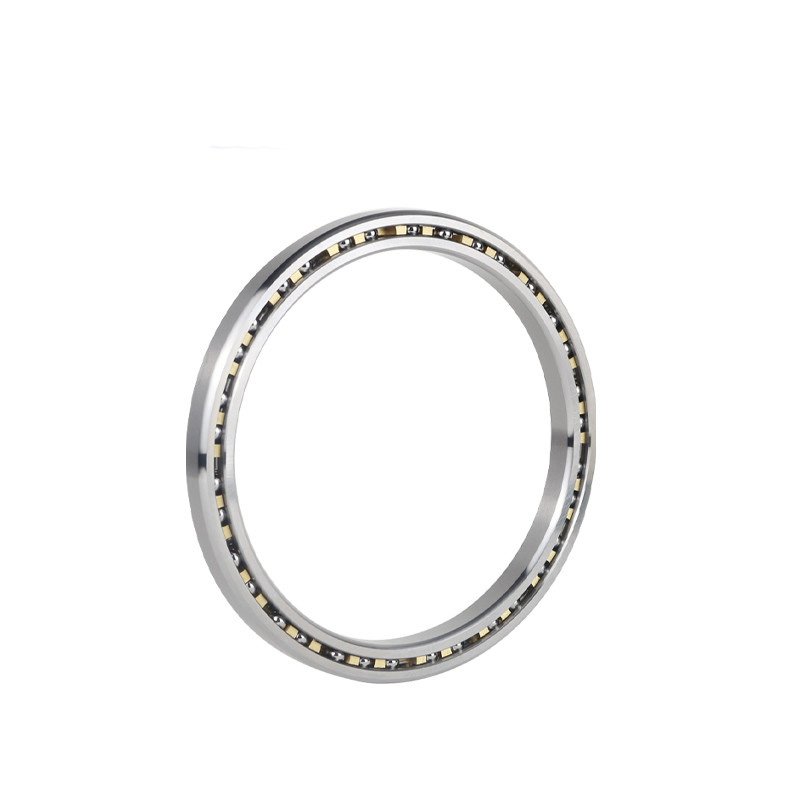
A key advantage of thin section ball bearings is their space-saving design. With bore sizes ranging from small (under 10mm) to large (over 1000mm) and cross-sections as thin as a few millimeters, they fit into compact equipment such as surgical robots, drone gimbals, and satellite components. This slim profile also reduces overall weight, a vital factor for aerospace and automotive applications where fuel efficiency or payload capacity matters.
Precision is another core benefit. Manufactured with tight tolerances (often ABEC 5 or higher), these bearings deliver smooth rotation and low friction, essential for high-speed tools, optical equipment, and semiconductor machinery. Many models feature corrosion-resistant materials like stainless steel, suiting harsh environments such as food processing or marine equipment.
Installation and maintenance are streamlined too. Flanged or unflanged designs adapt to different mounting needs, while sealed variants protect against contaminants—lowering downtime for industries like packaging or logistics.
When selecting thin section ball bearings, consider load type (radial, axial, or combined), operating speed, and environmental conditions. Partnering with a reputable supplier ensures compliance with industry standards (e.g., ISO 9001) and custom solutions for unique applications.
For compact, high-precision bearing needs, thin section ball bearings stand out as a reliable, efficient choice—powering modern technology where space and performance collide.