

If you’re an engineer, buyer, or manufacturer working with compact, high-precision machinery, you’ve likely come across the term “thin section bearings.” These specialized components are game-changers in industries where space and weight are at a premium—from aerospace and robotics to medical equipment and semiconductor manufacturing. Unlike traditional bearings, thin section bearings maintain a consistent, slim cross-section regardless of their bore size, making them ideal for designs where every millimeter (and gram) matters. In this guide, we’ll break down everything you need to know about thin section bearings in 2026: their types, key advantages, real-world applications, material options, and how to select the right one for your project.
What Are Thin Section Bearings?
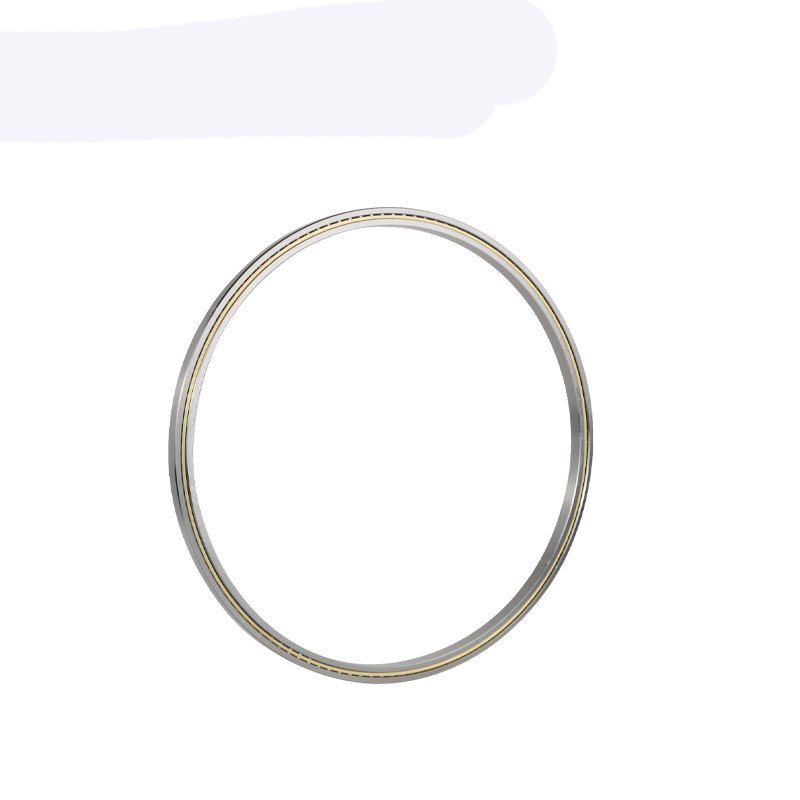
Thin section bearings—also called slim bearings or ultra-thin bearings—are a type of rolling-element bearing designed with a significantly smaller cross-sectional height compared to standard bearings. The defining feature of these bearings is that their cross-section remains constant even as the bore (inner diameter) increases, allowing for a minimal, consistent profile across a wide range of sizes. This design sets them apart from conventional bearings, which grow bulkier as their diameter increases, limiting their use in compact applications.
Most thin section bearings have an outer diameter (OD) to inner diameter (ID) ratio (D/d) of less than 1.25, with cross-sections ranging from 0.1875 inches to 1 inch thick depending on the series and application requirements. They’re manufactured to meet strict ABMA standards for tolerances, ensuring precision and reliability in even the most demanding environments. Whether you’re designing a surgical robot or a satellite component, thin section bearings deliver the performance you need without sacrificing space.
Common Types of Thin Section Bearings (2026 Update)
Thin section bearings come in several types, each tailored to specific load, speed, and precision requirements. Understanding the differences between these types is critical to choosing the right bearing for your application. Here are the most widely used varieties in 2026:
- Radial Contact Ball Bearings (Type C)
Radial contact ball bearings (often labeled Type C) are the most versatile and commonly used thin section bearings. They feature extra-deep ball grooves in both inner and outer rings (groove depth equals 25% of the ball diameter), making them ideal for applications with moderate to light radial loads. These bearings can accommodate small amounts of axial load in either direction if they don’t have a filling slot, but their primary purpose is radial load support.
Type C bearings perform best with a small radial clearance, which can be adjusted to account for interference fits, thermal expansion, or misalignment between the shaft and housing. They’re available with or without filling slots—bearings with filling slots can hold more balls, increasing radial load capacity but limiting high-speed performance and axial load capability. Common uses include optical equipment, rotary tables, and light-duty automation systems.
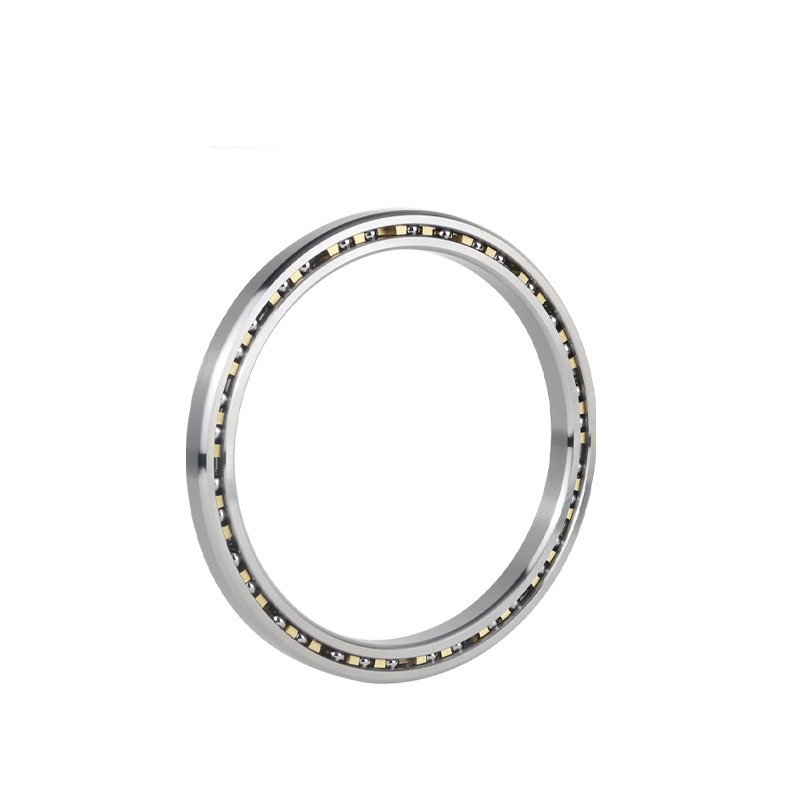
- Angular Contact Ball Bearings (Type A)
Angular contact ball bearings (Type A) are designed to support both radial and unidirectional thrust loads. They rely on a specific contact angle between the balls and races, which must be established by a thrust load to function properly. For this reason, they’re often mounted in opposed pairs (tandem, back-to-back, or face-to-face arrangements) to handle bidirectional thrust loads.
These bearings are popular in high-precision applications where stiffness and accuracy are critical, such as robotics joints, semiconductor manufacturing equipment, and high-speed spindle systems. They offer higher load capacity than radial contact bearings and are available in a range of tolerances (ABEC 1F, 3F, 5F, 7F) to meet strict precision requirements.
- Four-Point Contact Ball Bearings (Type X)
Four-point contact ball bearings (Type X) are the most versatile thin section bearings, capable of supporting any combination of radial, thrust, and moment loads. A single four-point contact bearing can often replace two angular contact bearings, simplifying design and reducing overall weight and space requirements. They feature a unique raceway design that creates four contact points between the balls and rings, distributing loads evenly and improving stability.
These bearings are ideal for applications with complex load requirements, such as machine tools, radar systems, and aerospace components. They’re also commonly used in large-diameter hollow shaft designs, where they allow for wiring, hydraulic lines, or other components to pass through the shaft—something conventional bearings can’t easily accommodate.
- Thin Section Tapered Roller Bearings
While less common than ball bearings, thin section tapered roller bearings are growing in popularity for applications that require high load-carrying capacity in a slim profile. They feature tapered rollers that distribute loads over a larger contact area, making them suitable for heavy-duty applications like wind turbine pitch systems and industrial gearboxes. These bearings combine the space-saving benefits of thin section design with the durability needed for harsh operating conditions.
Key Advantages of Thin Section Bearings
The rise in popularity of thin section bearings in 2026 is driven by their unique set of advantages, which address the most pressing challenges in modern engineering design. Here’s why more manufacturers are choosing thin section bearings over traditional options:
- Space-Saving Design
The biggest advantage of thin section bearings is their slim profile. By maintaining a constant cross-section regardless of bore size, they allow engineers to design more compact machinery. This is critical in industries like aerospace, where space is extremely limited, and medical equipment, where devices need to be small and portable. For example, a large-diameter hollow shaft using a single four-point thin section bearing can replace a conventional design with two bearings and a long solid shaft—freeing up space for wiring or hydraulic lines.
- Weight Reduction
Thin section bearings use less material than traditional bearings, resulting in a 30-50% weight reduction compared to standard bearings of the same size. This weight savings is a game-changer in applications where every gram impacts performance—such as aerospace components, robotics, and electric vehicles. Lighter bearings reduce overall equipment weight, improving energy efficiency and reducing wear on other components.
- High Precision & Stiffness
Manufactured to strict tolerances (ABEC 1F to 7F), thin section bearings deliver exceptional precision and stiffness. They’re designed for accurate positioning at low shaft speeds and can maintain sub-micron runout performance—critical for applications like medical imaging equipment, optical systems, and semiconductor manufacturing. Their high stiffness also makes them ideal for robotics joints, where precise, repeatable movements are required.
- Design Flexibility
Thin section bearings give engineers greater freedom to innovate. Their compact size allows for complex designs, such as hollow shafts, intricate gear arrangements, and miniaturized components. They can be customized to meet specific application needs, including custom materials, surface treatments, and seal designs. For example, manufacturers can add a dense chrome coating to 52100 steel bearings to match the corrosion resistance of 440C stainless steel, or use beryllium copper or aluminum for specialized applications.
- Cost-Effective Long-Term Performance
While thin section bearings may have a higher initial cost than standard bearings, their long-term benefits outweigh the investment. Their durability, precision, and weight savings reduce maintenance costs, improve equipment lifespan, and lower energy consumption. Additionally, their ability to replace multiple traditional bearings (e.g., one four-point contact bearing replacing two angular contact bearings) simplifies assembly and reduces component costs.
Top Applications of Thin Section Bearings in 2026
Thin section bearings are used across a wide range of industries, with demand growing fastest in high-tech sectors. Here are the most common applications driving market growth in 2026:
- Aerospace & Defense
The aerospace industry was one of the first to adopt thin section bearings, and it remains a key market in 2026. These bearings are used in satellite attitude control systems, aircraft wing adjustment mechanisms, radar systems, and spacecraft components. Their lightweight, high-precision design is critical for reducing fuel consumption and ensuring reliability in extreme environments (e.g., high altitude, temperature fluctuations).
- Robotics & Industrial Automation
With the rise of humanoid robots and collaborative robots, thin section bearings have become essential components in robotic joints, arms, and rotary tables. They provide the precision and stiffness needed for repeatable movements, while their lightweight design reduces the load on robotic motors. A single humanoid robot can use 20-30 thin section bearings, driving significant demand growth in 2026—demand is expected to exceed 5 million units this year alone.
- Medical Equipment
Thin section bearings are used in a variety of medical devices, including surgical robots, CT scanners, MRI machines, and medical pumps. Their low vibration, high precision, and corrosion resistance (when made from stainless steel or coated materials) make them ideal for sterile, high-performance medical applications. For example, surgical robots rely on thin section bearings for precise, smooth movements during minimally invasive procedures.
- Semiconductor & Optical Equipment
Semiconductor manufacturing equipment requires extreme precision to produce microchips, and thin section bearings deliver the sub-micron runout performance needed for wafer handling, inspection systems, and lithography equipment. They’re also used in optical equipment (e.g., cameras, telescopes) to ensure smooth, accurate lens positioning.
- New Energy Vehicles (EVs) & Wind Energy
As EVs shift to 800V high-voltage platforms, motor speeds are increasing to 16,000rpm and above—creating demand for thin section bearings that can withstand high temperatures and electrical corrosion. These bearings are used in EV electric drive systems to reduce weight and improve efficiency. In wind energy, they’re used in pitch systems and nacelles, where their compact design and durability handle harsh outdoor conditions.
Materials & Construction of Thin Section Bearings
The performance of thin section bearings depends heavily on the materials used in their construction. In 2026, manufacturers offer a range of materials to suit different application needs, including:
- Steel Alloys
The most common material for thin section bearings is AISI 52100 high-carbon chrome steel, which offers excellent durability, hardness, and wear resistance. For applications requiring corrosion resistance, 440C stainless steel is a popular choice. M50 tool steel is used for high-temperature applications, such as aerospace components, due to its superior heat resistance. Some manufacturers also offer custom bearings made from beryllium copper or aluminum for specialized lightweight or corrosion-resistant needs.
- Ceramic & Hybrid Bearings
Ceramic hybrid bearings—combining steel rings with silicon nitride ceramic balls—are growing in popularity in 2026. These bearings offer lower weight, higher speed capability, and better corrosion resistance than all-steel bearings. They’re ideal for high-speed applications like semiconductor equipment and medical micro-motors, where reducing centrifugal forces and thermal growth is critical. Approximately 29% of new thin section bearing purchases in 2026 are for ceramic or hybrid configurations.
- Seals & Separators
Thin section bearings require seals or separators to keep rolling elements clean and lubricated. Integral seals are often molded from nitrile rubber (Buna-N) and reinforced with steel to minimize overall design size. Non-contacting shields are used for high-speed applications, as they generate less torque and heat than seals. Separators (cages) are available in various materials, including polymer and steel, to meet different load and speed requirements.
How to Select the Right Thin Section Bearing (2026 Guide)
Choosing the right thin section bearing requires careful consideration of your application’s specific needs. Follow these steps to make an informed decision:
- Define Load Requirements
First, determine the type of load your bearing will handle: radial, axial, moment, or a combination. Radial contact bearings (Type C) are best for radial loads, while angular contact (Type A) and four-point contact (Type X) bearings handle combined loads. Four-point contact bearings are the most versatile for complex load scenarios.
- Consider Speed & Temperature
High-speed applications (e.g., semiconductor equipment, EV motors) require bearings with low friction and heat resistance. Ceramic hybrid bearings or bearings with non-contacting shields are ideal for these scenarios. For high-temperature environments, choose M50 tool steel or ceramic materials. Keep in mind that seals can reduce limiting speed due to increased torque and heat generation.
- Evaluate Precision Needs
Precision requirements vary by application—medical and semiconductor equipment need tight tolerances (ABEC 5F or 7F), while general automation may only require ABEC 1F or 3F. Ensure the bearing’s tolerance rating matches your application’s precision needs to avoid overpaying for unnecessary accuracy.
- Choose the Right Material
Select a material based on corrosion resistance, temperature, and load. Use 440C stainless steel for corrosive environments (e.g., medical equipment), 52100 steel for general applications, and ceramic hybrids for high-speed or high-temperature needs. Consider surface treatments (e.g., chrome coating) to enhance corrosion resistance without changing the base material.
- Factor in Customization
If your application has unique requirements (e.g., custom size, special seal, or material), look for manufacturers that offer custom thin section bearings. Many suppliers can design bearings to your exact specifications, including custom cross-sections, tolerances, and surface treatments.
Thin Section Bearings Market Trends in 2026
The global thin section bearings market is growing rapidly, with the Chinese market expected to exceed 12 billion RMB in 2026 and a compound annual growth rate (CAGR) of 12-15% over the next five years. Here are the key trends shaping the market this year:
- Growth in Humanoid Robots & EVs
The biggest driver of market growth is the boom of the humanoid robot industry, with single units using 20-30 thin section bearings. EVs are also driving demand, as high-voltage platforms require high-temperature and electrical corrosion resistant bearings for electric drive systems. These two sectors are expected to account for over 25% of thin section bearing demand by 2027.
- Localization Replacement & Technological Advancements
Domestic manufacturers in China are increasing their R&D investment (up to 5% of revenue) to compete with international giants like Schaeffler, NSK, and RBC. The localization rate of domestic high-end bearing steel has increased to 65%, with wall thickness tolerance control improved to ±0.01mm—closing the gap with international standards. This is making thin section bearings more affordable and accessible for mid-sized manufacturers.
- Shift to “Product + Service” Models
Manufacturers are moving beyond just selling bearings to offering full lifecycle solutions, including custom design, predictive maintenance, and technical support. By integrating sensors and AI algorithms, suppliers can help customers reduce maintenance costs by 20% or more, locking in high-value clients.
- Adoption of Additive Manufacturing
Additive manufacturing (3D printing) is being used to create custom thin section bearings with complex geometries that traditional manufacturing can’t produce. This technology is particularly useful for small-batch, high-customization applications, such as medical devices and aerospace components. While still emerging, 3D-printed thin section bearings are expected to gain traction in the coming years.
Final Thoughts
Thin section bearings are essential components in modern engineering, offering space-saving, lightweight, and high-precision solutions for a wide range of applications. Whether you’re designing a robotic arm, a satellite, or a medical device, choosing the right thin section bearing is critical to ensuring performance, reliability, and cost-effectiveness. By understanding the different types, materials, and selection criteria, you can make an informed decision that meets your application’s unique needs.
As the market grows in 2026, keep an eye on emerging trends like ceramic hybrid bearings, custom solutions, and the rise of domestic manufacturers. With the right thin section bearing, you can optimize your design, reduce costs, and stay ahead of the competition in an increasingly demanding market.