

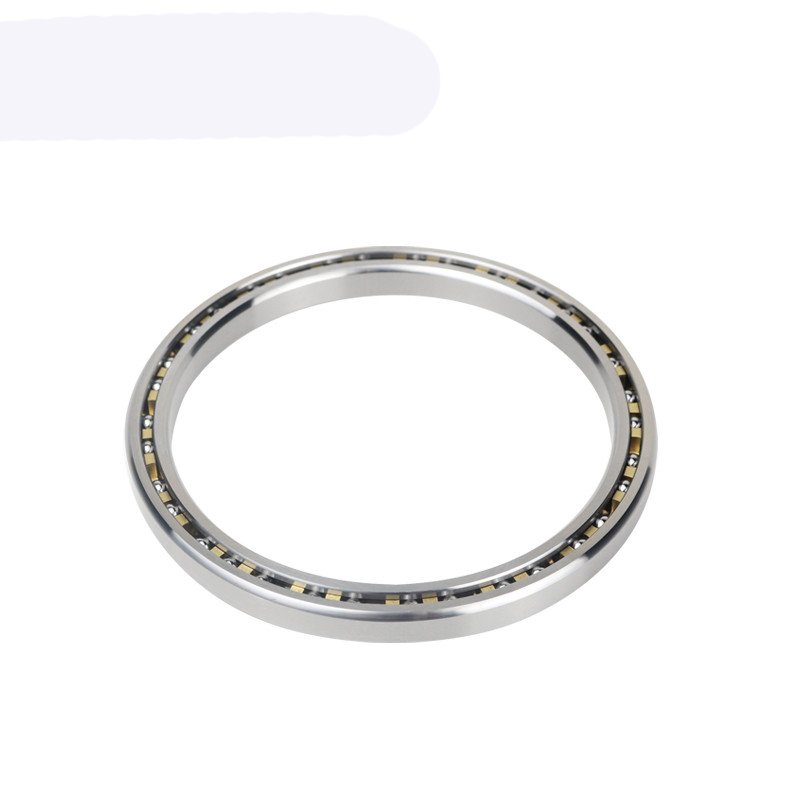
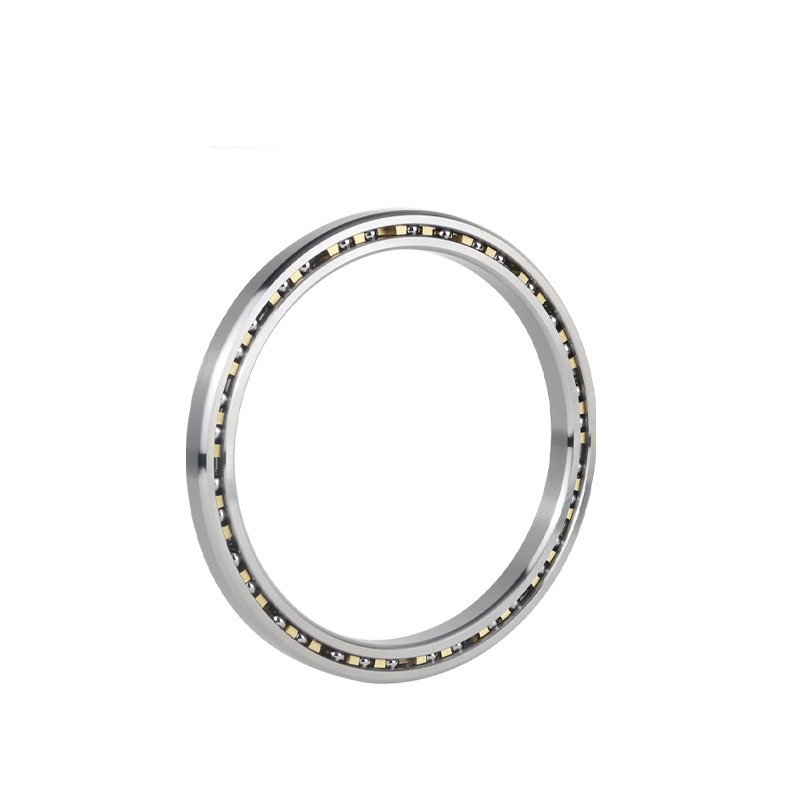
Thin section bearings have emerged as critical components in modern robotics, where space constraints, weight reduction, and high precision are non-negotiable. Unlike traditional bearings, their slim, compact design—characterized by a narrow cross-sectional profile—enables seamless integration into robotic systems without compromising on load capacity or rotational accuracy. This makes them ideal for robotic applications where every millimeter of space and gram of weight impacts performance, reliability, and energy efficiency.
Key Applications of Thin Section Bearings in Robotics
Their unique design addresses specific pain points across various robotic types, supporting smooth, precise motion in demanding workflows:
Collaborative Robots (Cobots): Cobots, designed to work alongside humans, require compact, lightweight components to ensure safety and maneuverability. Thin section bearings fit into cobot joints (shoulders, elbows, wrists) and end-effectors, enabling gentle, controlled movements. Their low friction reduces energy consumption, while their ability to handle radial and axial loads ensures stability during tasks like pick-and-place, assembly, or packaging.
Industrial Robotic Arms: High-speed 6-axis robotic arms, used in automotive manufacturing, electronics assembly, and logistics, rely on thin section bearings for rotational joints and linear slides. The bearings’ slim profile allows for tighter joint designs, minimizing inertia and enabling faster, more precise positioning—critical for tasks like welding, painting, or semiconductor handling, where sub-millimeter accuracy is required.
Robotic End-Effectors & Grippers: Thin section bearings are integral to robotic grippers, vacuum cups, and tool changers. Their compact size fits into small gripper housings, supporting smooth opening/closing motions while handling varying loads (from delicate electronic components to heavy metal parts). They also resist wear from repeated use, ensuring long-term reliability in high-cycle applications.
Mobile Robots & AGVs: Automated Guided Vehicles (AGVs) and autonomous mobile robots (AMRs) use thin section bearings in wheel hubs, steering mechanisms, and lift systems. The bearings’ lightweight design reduces the robot’s overall weight, extending battery life, while their durability withstands continuous movement across factory floors or warehouse environments.
Medical Robotics: Surgical robots (e.g., laparoscopic or orthopedic robots) and diagnostic robots demand ultra-precise, sterile components. Thin section bearings, often made with corrosion-resistant stainless steel and medical-grade lubricants, fit into compact robotic arms, enabling precise tissue manipulation or sample handling. Their low vibration ensures steady operation, critical for minimally invasive surgeries.
Why Thin Section Bearings Are Essential for Robotic Innovation
Thin section bearings solve the “space vs. performance” dilemma in robotics. They eliminate the need for bulky bearing assemblies, allowing engineers to design sleeker, more agile robots. Additionally, their high rigidity reduces deflection under load, maintaining accuracy even in high-speed or heavy-duty applications. For robotics manufacturers and integrators, this translates to improved robot performance, lower maintenance costs, and greater flexibility to adapt to evolving industry needs—from small-batch production to fully automated smart factories.
As robotics continues to advance toward miniaturization and higher precision, thin section bearings remain a foundational component, enabling the next generation of efficient, reliable, and versatile robotic systems.